jak správně testovat parfém na kůži | mr. dupe | mr. dupe
how to
jak správně testovat parfém na kůži
zjisti, jak testovat parfém na čisté kůži: 1 střik na každé místo, netři a zkontroluj hlavu, srdce i základ v časech 0–10, 20–30 minut a 2–6+ hodin.
by mr. dupe editorial, fragrance editors·
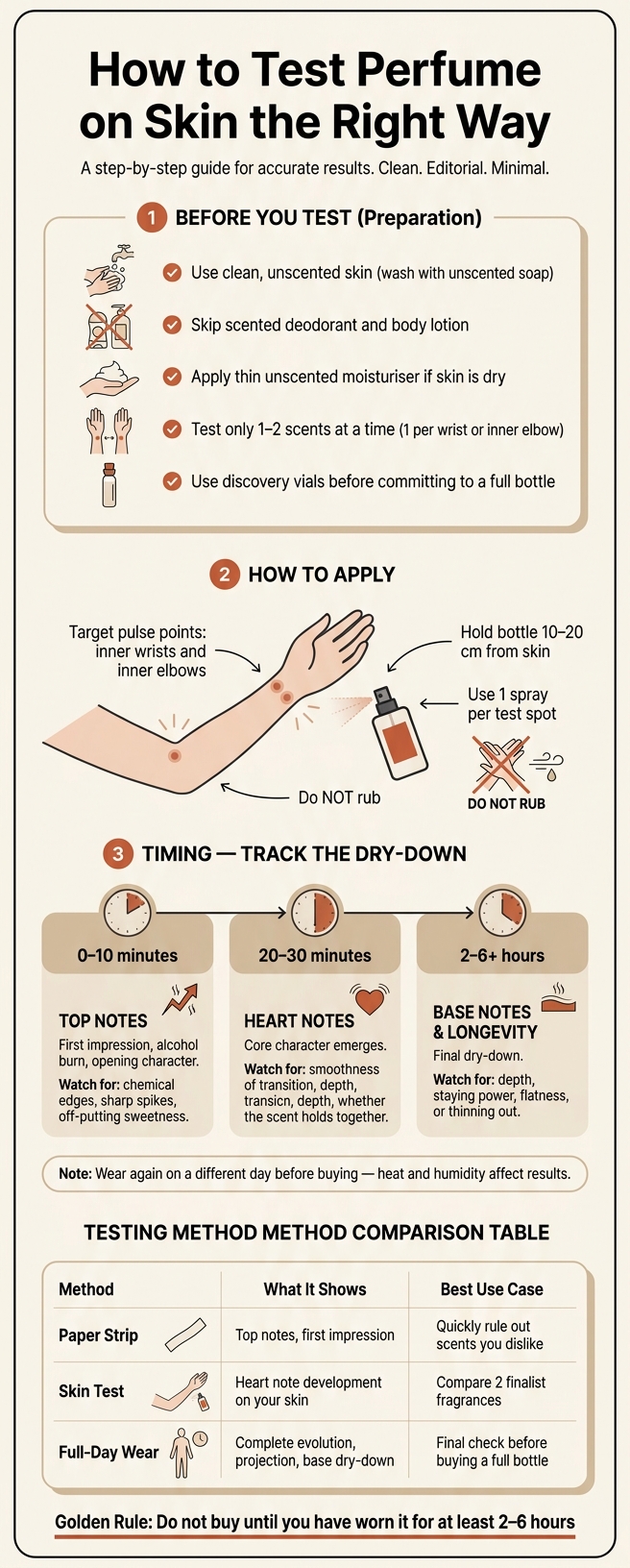
krátká odpověď: parfém testuju na čisté kůži, použiju 1 střik na každé místo, počkám, až se rozvinou všechny 3 fáze vůně, a prvních 10 minut ji nehodnotím.
když chci spolehlivě posoudit vůni, držím se jednoduchých pravidel:
začni na kůži, ne jen na papírku
testuj najednou jen 1–2 vůně
stříkej na zápěstí nebo do loketních jamek ze vzdálenosti 10–20 cm
vůni neroztírej
zkontroluj ji po 0–10 minutách, po 20–30 minutách a znovu po 2–6+ hodinách
než utratíš € za celé balení, vyzkoušej ji ještě jednou jiný den
1 rychlé přičichnutí nestačí. Úvodní vůně může být příjemná, ale později vyprchat a zůstat po ní jen slabá stopa. Proto sleduju postupně hlavu, srdce a základ vůně. Ve většině případů mi základ prozradí víc než první střik.
rychlé srovnání
metoda
co zjistím
hlavní omezení
kdy se hodí nejvíc
papírek
první dojem, hlavně vrchní tóny
neukáže, jak se vůně rozvine na kůži
když chci rychle vyřadit některé vůně
test na kůži
jak vůně působí na mně
najednou můžu testovat jen 1–2 vůně
když vybírám mezi favority
celodenní nošení
výdrž, projekci, konečné rozvinutí vůně
zabere čas a potřebuju vzorek
než si koupím celé balení
moje pravidlo: dokud vůni nenosím alespoň 2–6 hodin, rozhodnutí o nákupu ještě nedělám.
níže rozebírám přípravu kůže, způsob aplikace, načasování i to, čeho si všímám v každé fázi.
Jak testovat parfém na kůži: průvodce krok za krokem
Jak správně testovat parfémy | vyhni se drahým chybám!
the scent. none of the markup.
the same fragrances you already know, interpreted honestly and priced without the label tax.
krok 1: připrav si kůži a vše potřebné k testování
než začneš sledovat vrchní, srdeční a základní tóny, připrav si kůži, aby výsledek nic nezkreslilo.
začni s čistou, neparfémovanou kůží
Místa, která chceš testovat, umyj neparfémovaným mýdlem nebo sprchovým gelem. Ve dnech, kdy testuješ, vynech parfémovaný deodorant i parfémované tělové mléko. Zbytky vůní z jiných produktů můžou překrýt to, co se snažíš cítit.
pokud máš suchou kůži, nejdřív nanes tenkou vrstvu neparfémovaného hydratačního krému. Parfém pak může na kůži držet o něco lépe.
testuj najednou jen jednu nebo dvě vůně
drž se jednoduchého pravidla: jedna vůně na každé zápěstí funguje skvěle. Nebo jednu nanes na zápěstí a druhou do loketní jamky.
jakmile testuješ víc než dvě najednou, začíná v tom být zmatek. Nos se unaví a vůně se můžou slévat dohromady. Když je od sebe oddělíš, mnohem snáz pak sleduješ, jak se každá mění od vrchních tónů přes srdce až po základ, aniž by se navzájem ovlivňovaly.
než si koupíš celé balení, vyzkoušej vzorky
vzorky jsou chytrý způsob, jak otestovat vůni, než utratíš peníze za celé balení. Nos stejnou vůni v různé dny a sleduj, jak se pokaždé chová.
díky tomu si uděláš přesnější představu o tom, jak vůně působí, a nebudeš se spoléhat jen na jeden rychlý test.
jakmile máš kůži připravenou, nastříkej parfém na pulzní body ze vzdálenosti 10–20 cm.
krok 2: nanes parfém správně na pulzní body
vyber správné pulzní body
jakmile máš čistou kůži, můžeš vůni nanést. Pulzní body jsou teplejší místa na těle, takže se tam vůně obvykle rozvine rychleji a její charakter se projeví zřetelněji. pokud chceš férový test, použij jednu vůni na každé místo.
nejlepší místa jsou:
vnitřní strany zápěstí
loketní jamky
každou vůni nanes na jiné místo, aby se nesmíchaly.
stříkej ze vzdálenosti 10–20 cm a vůni neroztírej
drž flakon asi 10–20 cm od kůže a jednou nebo dvakrát stříkni. Na každé testované místo použij 1 střik nebo kapku.
pak už na vůni nesahej. Po nanesení ji neroztírej ani se jí nedotýkej. Tření může potlačit vrchní tóny a test pak bude méně spolehlivý. Nech parfém zaschnout samovolně, abys mohl posoudit, jak se skutečně rozvíjí. Potom se místa nedotýkej a sleduj, jak se vůně během dalších hodin mění.
krok 3: sleduj, jak se vůně rozvíjí, a hodnoť každou fázi
neposuzuj vůni podle prvního střiku. důležité je, jak se rozvine na pokožce. po aplikaci ji nech být a zkontroluj ji v pravidelných intervalech. během dalších několika hodin sleduj, jak se vůně mění, nejen jak se rozvoní na začátku.
0–10 minut: hlava
úvodní tóny vyprchají nejrychleji. všímej si varovných signálů: ostrého chemického nádechu, alkoholového výbuchu, který se nezklidní, nebo okamžité sladkosti, která působí nepatřičně. stojí za to si je poznamenat, ale nemusí vždy vypovídat o všem.
20–30 minut: srdce
zhruba po 30 minutách začnou přebírat hlavní roli střední tóny. právě tady můžeš posoudit, jestli přechod od úvodních tónů působí plynule, nebo náhle. slabší vůně inspirovaná originálem může v této fázi působit prázdně, skoro jako by se po odeznění prvního náporu rozpadla.
2–6+ hodin: základ a výdrž
závěrečný rozvoj vůně ti napoví, jestli má hloubku, nebo vyprchá příliš rychle. v této fázi posuzuješ výdrž a konečný dojem z vůně. levnější varianty mohou po odeznění hlavy působit mdle nebo ploše, zvlášť když základ spoléhá na méně kvalitní náhražky materiálů, jako je santalové dřevo nebo pižmo.
zkus ji znovu jiný den. teplo a vlhkost mohou změnit, jak se vůně rozvíjí, takže jedno nošení nestačí.
dále porovnáme testování na pokožce s papírovými proužky a celodenním nošením.
porovnej způsoby testování a vyber si ten pravý
test na pokožce vs. papírový proužek vs. celodenní nošení
vyber si test podle toho, jak blízko jsi k nákupu.
papírové proužky ti dají rychlý první dojem. test na pokožce ukáže, jak se vůně mění na tvé pokožce. celodenní nošení odhalí celý příběh: výdrž, projekci a závěrečný rozvoj vůně.
metoda
co ukáže
hlavní výhoda
hlavní omezení
nejvhodnější použití
papírový proužek
počáteční profil vůně a hlavu
rychlý způsob, jak otestovat mnoho vůní bez únavy čichu z testování na pokožce
neukáže, jak se vůně chová na tvé pokožce
vyřazení vůní, které se ti hned nelíbí
test na jednom místě pokožky
jak se vůně rozvíjí na tobě
ukáže, jak se na tvé pokožce rozvíjí srdce
omezeno na 1–2 vůně najednou
výběr mezi dvěma favority
celodenní nošení
celý vývoj vůně, projekci a rozvoj základu
ukáže, jak se vůně chová při celodenním nošení
potřebuješ vzorek a dost času, abys ji mohl/a pořádně nosit
poslední kontrola před nákupem plného flakonu
jednoduše řečeno: pomocí papírových proužků zúž výběr, na pokožce porovnej své favority a celodenním nošením si potvrď, kterou vůni chceš.
klíčové kroky k přesnému výsledku
drž se vždy jedné metody a pak porovnej stejnou vůni při několika testech nošení. díky tomu bude srovnání férovější.
při každém testování vůni zkontroluj ve stejných časech. srdce se obvykle projeví zhruba po 30 minutách. základ se ukáže o několik hodin později. když kontroluješ vůni pokaždé ve stejných časech, začnou se rýsovat vzorce.
tady se hodí vzorky. mr. dupe discovery vzorky ti usnadní opakované testování před nákupem plného balení.
časté dotazy
proč parfém voní na mé pokožce jinak než na papíře?
parfém voní na pokožce jinak, protože chemie tvého těla ovlivňuje, jak se vůně rozvine. papírový proužek zůstává neutrální. tvoje pokožka naopak může ovlivnit, jak se vůně nosí, a to kvůli faktorům, jako je typ pokožky, tělesná teplota a hydratace.
roli hraje také teplo. teplá místa, jako jsou pulzní body, pomáhají vůni se šířit a postupně rozvíjet, takže hlava, srdce a základ se projevují jinak než na papíře. proto ti testování parfému na vlastní pokožce poskytne přesnější představu o tom, jak na tobě bude skutečně vonět.
co mám dělat, když parfém na mé pokožce příliš rychle vyprchá?
pokud tvůj parfém rychle vyprchá, začni s 2–3 střiky pouze na pulzní body: zápěstí, krk, vnitřní stranu loktů a za uši. nerozetírej ho.
nejdřív nanes neparfémované tělové mléko. potom nech vůni samovolně zaschnout a zkontroluj ji znovu podle obvyklého časového rozvoje tónů. hlava se ustálí přibližně po 30 minutách, zatímco srdce a základ se projeví během dalších několika hodin.
kolikrát mám nosit discovery vzorek, než si koupím plný flakon?
žádný pevně stanovený počet nošení neexistuje.
lepší je používat discovery vzorek od mr. dupe tak dlouho, dokud nezískáš jasnou představu o tom, jak se vůně postupně rozvíjí na tvé pokožce.
pomůže také vyzkoušet ji v různé dny. můžeš tak sledovat, jak se usazují hlava, srdce a základ, protože teplota, vlhkost i hydratace pokožky mohou ovlivnit její výkon.