dupes parfémů: jak moc se podobají vůní? | mr. dupe | mr. dupe
guides
dupes parfémů: jak moc se podobají vůní?
proč se mnoho parfémových dupes shoduje při prvním přivonění, ale v srdci a základu se jejich vůně rozcházejí — vysvětlení testování, výdrže a cenových rozpětí.
by mr. dupe editorial, fragrance editors·
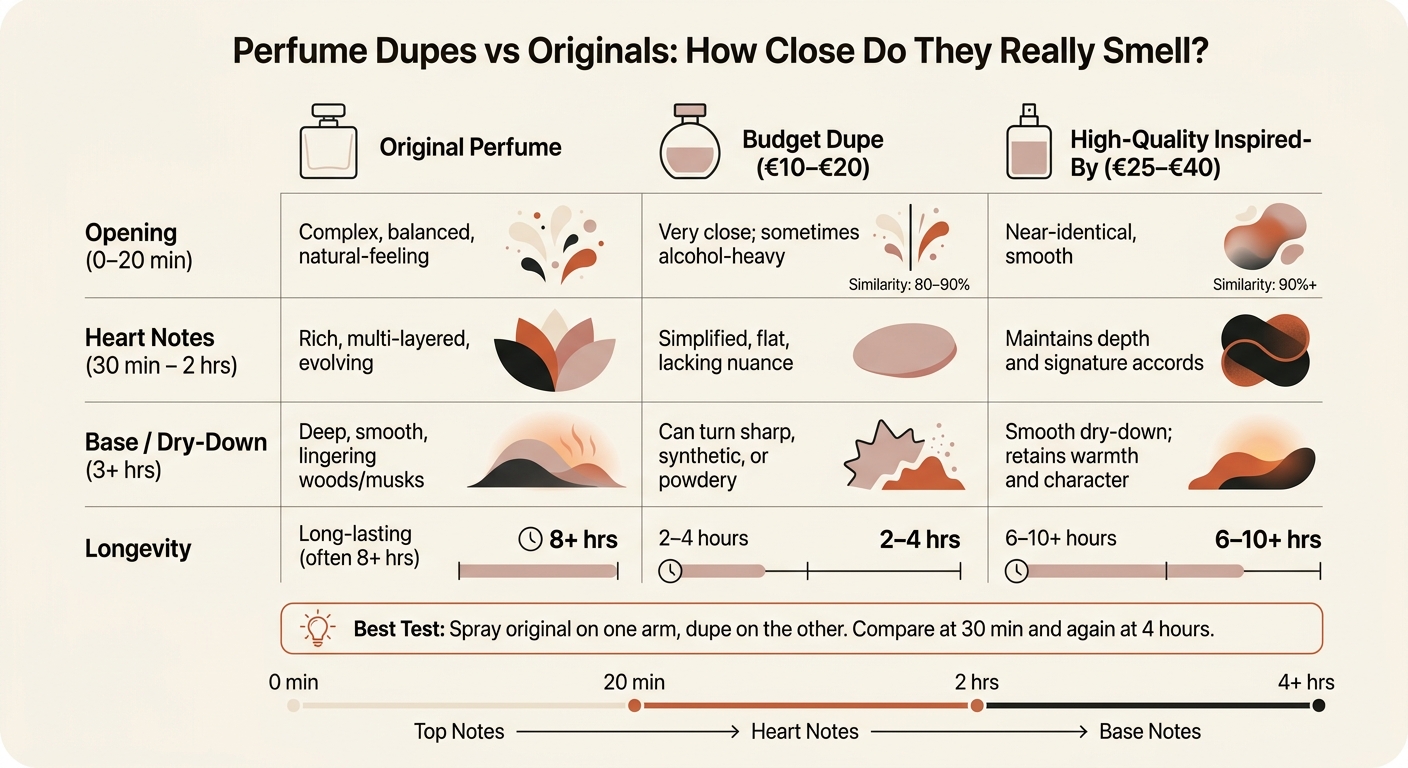
většina parfémů typu dupe voní nejpodobněji během prvních 5–20 minut, rozdíl se pak často projeví v srdci a základu. když chci posoudit, jak moc se vůně podobá originálu, nezůstanu jen u prvního střiku. vyzkouším ji na kůži, porovnám ji po 30 minutách a znovu po 4 hodinách a sleduju, jak se mění její doznívání.
stručně řečeno:
úvod: spousta dupe vůní může hned po aplikaci vonět na 80–90 % podobně.
srdce a základ: tady bývají levnější složení plošší, ostřejší, sladší nebo pudrovější.
nejlepší test: originál na jednu paži, dupe na druhou a nosit celý den.
hlavní faktory: struktura vůně, materiály, fixátory, typ pleti a počasí.
rozdíl v ceně: levné dupe vůně stojí obvykle kolem €10–€20, zatímco kvalitnější vůně inspirované originály často stojí .
€25–€40
výdrž: mnohé levné vůně vydrží 2–4 hodiny; výraznější složení může vydržet 6–10+ hodin.
záleží i na několika pojmech. vůně inspirované originálem se drží stejného stylu, ale zachovávají si vlastní identitu. dupe se snaží napodobit hlavní akord. klon se pokouší přiblížit vůni co nejvíc, téměř v poměru 1:1. v každodenním používání mi ale na označení záleží míň než na jedné věci: voní pořád podobně i po několika hodinách?
Perfume Dupes vs Originals: How Close Do They Really Smell?
12 nových klonů vůní a jejich originály – pravda
the scent. none of the markup.
the same fragrances you already know, interpreted honestly and priced without the label tax.
můj pohled je jednoduchý: dobré dupe nemusí kopírovat každou molekulu. musí zachovat stejný celkový vývoj vůně od úvodu až po doznívání. podle toho bych se rozhodoval před nákupem.
jak porovnat dupe s originálem
jestli chceš zjistit, jak moc se dupe podobá originálu, vyzkoušej ho na kůži, ne v lahvičce. nastříkej originál na jedno místo a dupe na jiné, ve stejnou dobu. pak je zkontroluj po 30 minutách a znovu po 4 hodinách.
takové přímé srovnání ti řekne mnohem víc než rychlé přičichnutí.
hlava: proč bývá úvod nejpodobnější
prvních 5–20 minut tvoří rychle se odpařující vrchní tóny, jako jsou citrusy, lehké aromatické tóny, zelené bylinky a svěží ovoce. rychle vyprchají a snáz se napodobují, takže i levné dupe může hned po prvním střiku vonět originálu velmi podobně.
tato počáteční podobnost ale může být trochu zavádějící. vůně, které jsou si zpočátku podobné, se často změní, jakmile se na kůži rozvinou.
srdce a základ: kde se projeví skutečné rozdíly
jakmile vrchní tóny vyprchají, obvykle během 20–30 minut, začnou dominovat tóny srdce a základu. právě tady se většina dupe vůní začne od originálu vzdalovat. květiny, koření, dřevo, pižmo a pryskyřice se napodobují hůř a luxusní originály často spoléhají na vlastní materiály, které se obtížně kopírují. právě tehdy dupe často přestane vonět totožně a začne vonět dostatečně podobně.
mnoho levných dupe vůní nahrazuje tyto složky levnějšími syntetickými aromatickými látkami. výsledné doznívání může působit plošeji, ostřeji, kovově nebo příliš sladce. dřevitý základ může být drsný. jemné pižmo může působit pudrově. a plynulý přechod od srdce k základu – jedna z věcí, která dodává vůni uhlazenost – se často vytratí.
kvalitní vůně inspirované originály mohou používat aromatické látky analyzované metodou gc a lepší fixátory, díky kterým zůstává vůně při doznívání vyrovnanější.
Hluboké, hladké a dlouhotrvající dřevité tóny a pižmo
Může působit ostře, synteticky nebo pudrově
Hladký dozvuk; zachovává si hřejivost a charakter
Teď přichází důležitější otázka: proč některé kompozice zůstávají věrné předloze, zatímco jiné se od ní odchylují.
Proč některé dupe vůně voní téměř stejně jako předloha a jiné se od ní odchylují
Rozdíl mezi úvodem a dozníváním obvykle závisí na návrhu kompozice, nejen na tom, jak dobře se vůně rozprašuje. Jednoduše řečeno, úspěch dupe vůně stojí na třech věcech: struktuře, materiálech a přesnosti kompozice.
Jednoduché vonné struktury se snáz věrně napodobují
Vůně postavené na akordech vanilky, ambry, pižma nebo citrusů a dřeva se obvykle napodobují mnohem snáz než vysoce vrstvené niche parfémy. Dává to smysl. Když má vůně jednodušší stavbu, je v ní méně prvků, které je třeba sladit.
Některé luxusní značky to ještě ztěžují používáním drahých, těžko dostupných materiálů nebo vlastních aromatických chemikálií, kvůli kterým je kompozice mnohem obtížnější přesně napodobit. A čím víc vrstev vůně má, tím rychleji vyniknou i drobné nepřesnosti v kompozici.
Jak materiály a fixátory ovlivňují rovnováhu vůně v průběhu času
Analýza GC/MS může dupe vůni výrazně přiblížit předloze, ale dokonalou shodu nezaručí. Právě tady začínají být materiály a fixátory opravdu důležité. Pokud jsou fixátory slabé, vůně může působit méně plně a po vyprchání úvodních tónů ztratit rovnováhu.
V tomhle ohledu je mr. dupe o úroveň výš než generické levné dupe vůně. Značka se zaměřuje na kvalitnější materiály, lepší rovnováhu a stabilnější vůni na kůži, díky čemuž si vůně déle zachovává svůj charakter.
Srovnávací tabulka výhod a nevýhod
Rozdíl nejsnáze poznáš, když vedle sebe porovnáš podobnost, výdrž a doznívání vůně.
Vlastnost
Generická levná dupe vůně
mr. dupe (mrdupe.com)
Podobnost úvodních tónů
Vysoká (80–90 %)
Velmi vysoká (90 %+)
Shoda v doznívání
Nízká (vůně se často změní nebo zeslábne)
Vysoká (zachovává si charakter)
Výdrž
2–4 hodiny
6–10+ hodin
Obvyklá cena (€)
€10–€20
€25–€40
I výrazná dupe vůně se na kůži může změnit. Proto záleží i na chemii pokožky a podmínkách nošení.
Jak chemie pokožky a podmínky nošení mění výsledek
Dva lidé si mohou nastříkat úplně stejnou dupe vůni, a přesto vonět jinak. Je to normální. Chemie pokožky mění, jak se vůně rozvine, usadí a vyprchá.
Jak typ pokožky, pH a suchost ovlivňují srdce a základní tóny
Kožní maz, pH a suchost ovlivňují, co se děje po úvodních tónech. Mastná pokožka má tendenci déle zadržovat molekuly vůně, což může zlepšit projekci a prodloužit doznívání. Na suché pokožce mohou srdce a základní tóny vyprchat rychleji, takže vůně po první hodině působí méně plně.
U dupe vůní je to znát ještě víc. Vůně inspirované originály často nahrazují přírodní složky syntetickými a tyto materiály mohou jinak reagovat na teplotu a kyselost pokožky. Na jednom člověku může stejná dupe vůně působit sladčeji. Na někom jiném může vonět sušeji nebo dřevitěji. Největší změny obvykle nastávají v srdci a základu, když se vůně začne usazovat. A pak stejnou kompozici znovu ovlivní teplota.
Jak teplota a roční období ovlivňují vůni v Německu a EU
V Německu a ve velké části EU mohou vlhká léta a suché, chladné zimy změnit, jak se dupe vůně na kůži rozvine. Vyšší teploty urychlují odpařování, což může zvýšit projekci, ale zároveň rychleji vytrácí horní tóny. Chladné počasí může vůni utlumit a snížit její dosah.
Další roli hrají vlhkost a vytápění interiérů. Vůně se může jinak rozvíjet v teplém bytě nebo kanceláři a jinak působit, když vyjdeš do chladného venkovního vzduchu. Dupe vůně tak může v jednom prostředí působit podobně jako originál a v jiném se od něj odchýlit, i když se její kompozice nezměnila.
Proč testování před nákupem snižuje riziko
Jediným spolehlivým testem je vyzkoušet vůni na celý den. Potřebuješ dost času, abys zachytil/a celý vývoj: svěží úvod, srdce vůně a nakonec základ.
Pro přímé srovnání snižuje mr. dupe riziko nákupu naslepo díky vzorkům vůní o objemu 2 ml za €0,00 a vyhledávači vůní, takže si můžeš dupe vůni vyzkoušet na kůži ještě před koupí celé lahvičky.
Závěr: Co čekat od kvalitní dupe vůně
Dupe vůně jsou vytvořené tak, aby napodobily charakteristický akord, ne každou jednotlivou molekulu. Když se tedy lidé ptají, jak moc se podobají, odpověď je docela jednoduchá: často jsou podobné v úvodu a větší rozdíl se projeví později.
Proto je hlavní zkouškou výdrž. Dupe vůně obvykle udělá nejlepší první dojem hned po nastříkání. Ale doznívání je místo, kde se všechno buď udrží pohromadě, nebo se začne rozpadat. levnější náhražky a slabší fixátory se v této fázi obvykle projeví nejvýrazněji. kvalita složení vysvětluje velkou část rozdílu a chemie pokožky ovlivňuje, jak se tento rozdíl projeví u každého člověka.
chytrý způsob, jak posoudit dupe, je dát mu pár hodin, ne jen prvních 5 minut. pokud si zachová svůj charakter přes srdce až k základu, i když nekopíruje originál tón po tónu, jde o povedený dupe.
pokud chceš snížit riziko nákupu naslepo, nejdřív vůni vyzkoušej. zákazníkům v eu umožňují 2ml vzorky vůní od mr. dupe vyzkoušet vůni na pokožce ještě před koupí plného flakonu. je to jednoduchý způsob, jak se vyhnout nákupu naslepo.
časté dotazy
jak poznám, že je dupe povedený?
dobrý dupe by měl působit podobně jako originál od začátku až do konce. úvod by měl vonět podobně, srdce by se mělo rozvíjet podobným způsobem a základ by měl doznívat povědomě a na pokožce dobře vydržet.
vyzkoušej ho společně s originálem na různých místech pokožky. potom postupně porovnávej úvod, srdce a doznívání. chemie pokožky může ovlivnit, jak se vůně rozvine, proto posuzuj její celkový vývoj místo toho, abys čekal/a dokonalou kopii jedna ku jedné.
proč se dupes po pár hodinách mění?
dupes mohou po pár hodinách vonět jinak, protože se vůně rozvíjí v několika fázích. nejdřív se projeví vrchní tóny, potom srdce a nakonec základní tóny, jak vůně doznívá. dupe tak může po prvním stříknutí působit velmi podobně, ale postupem času se může od originálu odchýlit.
i drobné změny ve složení mohou tento rozdíl později zvýraznit. může jít například o jinou koncentraci nebo pozměněné ingredience. tyto změny se často nejzřetelněji projeví při přechodu od srdce k základu.
svou roli hraje i chemie pokožky. stejně tak rozdíly mezi šaržemi a způsob, jakým se vůně před plněním do flakonů ustálí. i když se dvě vůně zpočátku rozvíjejí téměř stejně, jejich doznívání se může ubírat jiným směrem.
voní dupes na různých lidech jinak?
ano. i když dupe zpočátku voní podobně, chemie pokožky může časem ovlivnit jeho vývoj. úvod, srdce i doznívání tak mohou na každém vonět trochu jinak.
a většina dupes stejně není přesnou kopií. drobné změny v ingrediencích, koncentraci a složení mohou ovlivnit, jak se vůně rozvíjí, zejména na pokožce oproti testovacímu papírku.