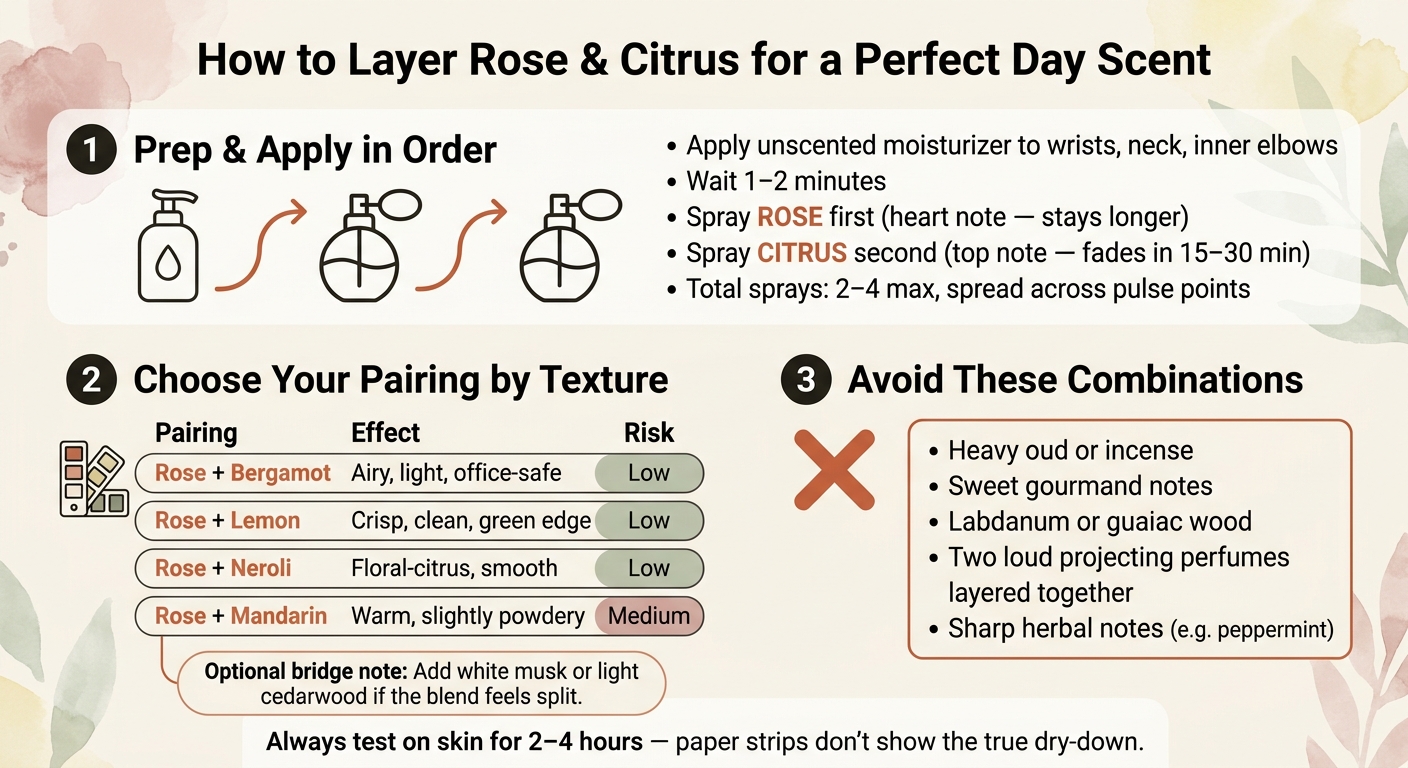
bílé pižmo nebo světlé cedrové dřevo můžou pomoct, pokud vůně působí nesourodě
oud, kadidlo, výrazně ambrové vůně a sladké gurmánské tóny často směs utlumí nebo zostří
test na zápěstí po dobu několika hodin je nejjednodušší způsob, jak zjistit, jestli vůně funguje na kůži
bral bych to jako nenáročný způsob, jak přes den nosit květinové tóny. ve většině případů stačí do práce, na pochůzky nebo na běžný den venku celkem 2–3 střiky. a protože vrchní tóny vyprchají jako první, na pořadí záleží víc, než si mnozí myslí.
můj rychlý přehled: růže + bergamot jsou nejjistější denní kombinace, růže + citron působí čistěji a ostřeji a růže + mandarinka je o něco teplejší, takže může být trochu těžší udržet ji lehkou.
kombinace
jak působí
riziko
růže + bergamot
vzdušná, lehká, vhodná do kanceláře
nízké
růže + citron
svěží, čistá, se zeleným nádechem
nízké
růže + mandarinka
jemnější, teplejší, lehce pudrová
střední
růže + neroli
květinově-citrusová, s hladkým přechodem
nízké
jeden užitečný detail: v parfémové kompozici vrchní tóny často vyprchají během 15–30 minut, zatímco srdcové tóny vydrží mnohem déle. proto citrusy nanesené přes růži často na kůži vytvoří lepší denní vůni.
kdybych vybíral naslepo, nedělal bych to. nejdřív bych vůni vyzkoušel na kůži, protože po 2–4 hodinách může vonět na papírku a na kůži dost odlišně.
kombinace s růží, kterou na jaro potřebuješ 🌹✨
the scent. none of the markup.
the same fragrances you already know, interpreted honestly and priced without the label tax.
krok 1: připrav si kůži a nanášej vůně ve správném pořadí
vrstvení růže a citrusů: postup pro vytvoření denní vůně
nanes na zápěstí, krk a vnitřní stranu loktů neparfémovaný hydratační krém a počkej 1 až 2 minuty. směs pak na kůži působí jemněji, ale zůstane svěží a vyvážená.
nejdřív nanes růži, potom citrusy
nejdřív nanes růži, potom citrusy. růže tvoří srdce vůně, citrusy rozjasní její úvod. růže obvykle patří mezi srdcové tóny, zatímco citrusy, jako je bergamot, citron a neroli, zůstávají ve vrchních tónech a rychleji vyprchají. při nanášení v tomhle pořadí nejdřív vytvoříš strukturu vůně a pak jí dodáš jiskru.
přes den to se střiky nepřeháněj
na denní nošení stačí celkem 2 až 4 střiky. rozlož je na pulzní body místo toho, abys všechno nanesl na jedno místo. vůně tak během dne zůstane jemná a lehká.
jakmile máš základ, vybírej kombinace podle jejich charakteru, ne jen podle názvů tónů.
krok 2: vybírej kombinace růže a citrusů podle jejich charakteru, nejen podle názvů tónů
jakmile máš základ, další krok je jednoduchý: vyber kombinace, které se na kůži čistě propojí. to, že dvě vůně sdílejí stejné rodiny tónů, ještě neznamená, že spolu budou ladit. u růže a citrusů záleží na charakteru stejně jako na názvu tónu. pokud chceš vzdušný denní efekt, slaď je podle intenzity a pocitu.
růže s bergamotem nebo citronem pro svěží, vzdušný výsledek
bergamot se dobře hodí ke krémovějším typům růže, jako je růže z grasse, i k pudrové damašské růži. dodá směsi lehkost, aniž by působila ostře.
citron je ostřejší. přináší čistou svěžest a hodí se do teplejšího počasí, zvlášť když chceš vůni dodat víc jiskry. má to ale háček: pokud použiješ citron, nech zbytek směsi lehký. příliš mnoho hutných tónů kolem něj může celou vůni vyvést z rovnováhy.
růže s neroli pro čistý květinově-citrusový profil
Neroli – někdy uváděné jako pomerančový květ – leží někde mezi květinovými a citrusovými tóny. Proto dodává směsi čistý květinově-citrusový charakter.
Pokud ti citron připadá trochu příliš ostrý, neroli bývá příjemnější volbou. Zjemňuje přechod mezi růží a citrusy, takže směs působí uceleněji a hladčeji.
jako spojovací tón použij čisté pižmo nebo světlé dřevo
Někdy kombinace růže a citrusů voní trochu nesourodě, jako by spolu vrchní a střední tóny nekomunikovaly. Právě tehdy pomůže jemný základní tón.
Obě vrstvy propojí bílé pižmo nebo světlé dřevo, například cedr. Tyto tóny mohou zjemnit přechod mezi růží a citrusy, aniž by vůně působila těžce.
Než si koupíš celé balení, vyzkoušej kombinace na kůži pomocí vzorků od mr. dupe.
Až bude kombinace vyvážená, zkontroluj, jestli ji žádný výrazný tón nezostřuje nebo nezakalí.
krok 3: vyhni se kombinacím, které působí ostře, sladce nebo těžce
I když vůně naneseš ve správném pořadí, kombinace může pořád vyznít špatně, když se objeví nevhodné tóny. Problém obvykle není v tom, kolik vůně použiješ. Některé vonné rodiny se s růží a citrusy zkrátka nesnášejí.
nevrstvi na sebe dvě výrazné, intenzivní vůně
Když spolu dvě silné vůně na kůži soupeří o prostor, výsledek může působit těžce nebo nezvykle ploše místo čistě. Těžké syntetické dřevité tóny a ambra se často špatně vyvažují s citrusy. Pokud chceš lehkou denní vůni, dopřej růži a citrusům víc prostoru.
vynech těžký oud, kadidlo a sladké gurmánské tóny
Vynech oud, kadidlo, labdanum, guajakové dřevo a sladké gurmánské tóny. Díky nim mohou růžovo-citrusové směsi působit hutně a nevýrazně.
pozor na kovové, mýdlové nebo výrazně bylinné střety
Některé růžové vůně, zejména ty postavené na pelargonii nebo fialkovém listu, mohou na kůži působit kovově, když se setkají s ostrými citrusy. Přechod může zjemnit spojovací tón, jako je bílé pižmo. Stejně drsnou hranu mohou vytvořit i ostré bylinné tóny, například máta peprná.
Jednoduchý test na zápěstí tě může ušetřit nepovedeného dne s vůní. Vyzkoušej kombinaci na jednom zápěstí a nech ji několik hodin působit. Často je to nejrychlejší způsob, jak zjistit, jestli ti směs na kůži funguje. Pokud ano, můžeš z ní udělat denní rutinu, kterou budeš opakovat.
sestav si jednoduchou denní rutinu a před nákupem vůni vyzkoušej
snadno opakovatelný postup pro pracovní dny i běžné denní nošení
Až bude kombinace působit vyváženě, drž se stejné jednoduché ranní rutiny. Nejdřív nanes hydratační krém, nastříkej růžovou vůni a pak přidej jeden střik lehké citrusové vůně. Měj to pod kontrolou a skonči u 2–3 střiků celkem.
Tenhle jednoduchý postup se hodí do kanceláře, na kávu i na pohodové denní plány. Nejde o to navrstvit víc vůně. Jde o to nechat růži jemnou a dopřát citrusům čistý, svěží nádech.
před nákupem celého balení vyzkoušej vůni na kůži pomocí vzorků
Než utratíš peníze za celé balení, vyzkoušej směs na vlastní kůži pomocí vzorků od mr. dupe. Papírové testovací proužky ti dají jen přibližnou představu, ale až na kůži se ukáže, jak se vůně skutečně rozvine.
Pokud jsi v německu, vzorky jsou snadný způsob, jak vůni vyzkoušet před nákupem celého balení. K výběru citrusových kombinací podle tónů a nálady můžeš použít také vyhledávač vůní, který ti pomůže zorientovat se v možnostech.
Tyto kombinace ber jako rychlý seznam tipů k nákupu.
typ kombinace
účinek
míra rizika
růže + bergamot
zářivá, vzdušná, profesionální
nízká
růže + citron
svěží, čistá, zelená
nízká
růže + mandarinka
hřejivá, pudrová, romantická
střední
závěr: růži nech jemnou, citrusy lehké a směs měj pod kontrolou
Pokud směs i po několika hodinách na kůži voní svěže, můžeš ji nosit přes den. Drž se jednoduchého složení: jemná růže, lehké citrusy a střídmá ruka. Víc většinou není potřeba, aby vůně zůstala svěží, čistá a vhodná na denní nošení.
časté dotazy
jak poznám, že je moje růže na citrusy příliš těžká?
Růže je na citrusy nejspíš příliš těžká, když vůně přestane působit vzdušně a zářivě a začne být vtíravá nebo příliš intenzivní. Dobrá růžovo-citrusová směs by měla působit svěže a příjemně se nosit.
Pokud růže převládne a utlumí svěží jiskru citrusů, kombinace není vyvážená. Vyhledávač vůní od mr. dupe ti pomůže najít uhlazenější a lépe vyváženou kombinaci.
mám citrusovou vůni během dne nanášet znovu?
Záleží na tom, jak výrazně ji chceš na kůži cítit. Mnoho citrusových vůní vydrží 6 až 8 hodin. Některé jsou lehčí a můžeš je během dne snadno obnovit, zatímco jiné zůstávají podobně intenzivní od rána až do večera.
pokud chceš, aby vůně vydržela déle, aniž bys ji musel/a tak často znovu stříkat, můžou ti pomoct duo layering sety od mr. dupe. kombinují koncentrovaný tělový olej se sprejem edp, díky kterému s tebou vůně může vydržet déle.
kam mám nanést každou vrstvu, aby byl výsledek co nejlepší?
nejdřív nanes tělový olej bez alkoholu na pulzní body. pak počkej 1–2 minuty, než se vstřebá do pokožky.
potom nastříkej edp na zápěstí, krk a vnitřní stranu loktů. tyto teplejší oblasti pomáhají vůni šířit se rovnoměrněji, zlepšují její projekci a pomáhají jí vydržet během dne déle.