7 noten, die der KI-parfümfinder zuerst erfasst | mr. dupe | mr. dupe
fragrance notes
7 noten, die der KI-parfümfinder zuerst erfasst
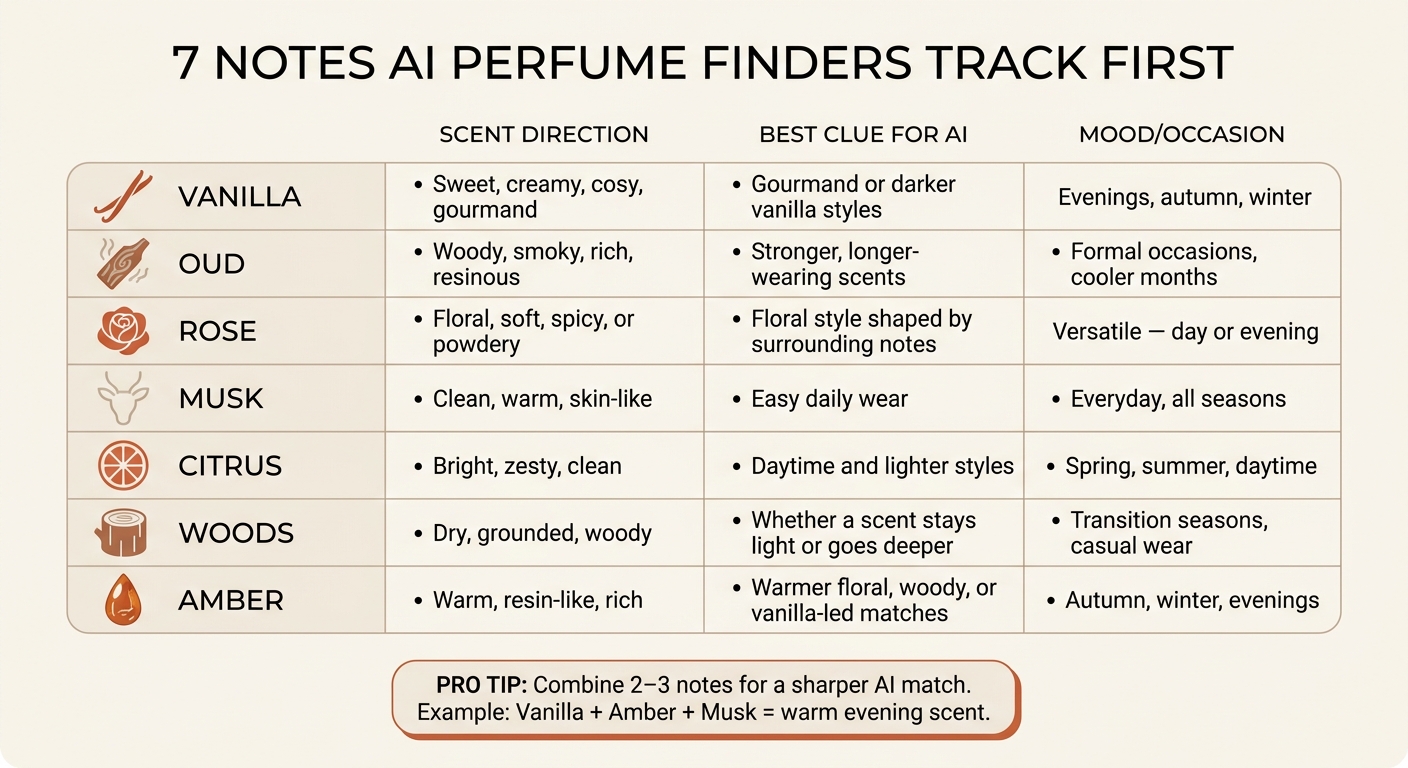
KI-parfümfinder beginnen mit sieben kernnoten—vanille, oud, rose, moschus, zitrus, holz, amber—, um passende düfte schnell einzugrenzen.
by mr. dupe editorial, fragrance editors·
Wenn ich den artikel auf eine idee kürzen müsste, wäre es diese: ein ki-parfümfinder beginnt meist mit 7 duftnotengruppen – vanille, oud, rose, moschus, zitrus, holz und amber – und grenzt die passenden düfte anschließend anhand deiner stimmung, der parfums, die du bereits trägst, und des anlasses ein.
Wenn ich online parfum kaufen würde, wäre das auch mein ausgangspunkt. So kann ich süß vs. warm, leicht vs. intensiv und tagsüber vs. abends einordnen, bevor ich überhaupt eine flasche ansehe. In diesem fall durchsucht der finder über 100 von bekannten düften inspirierte parfums, mit 2-ml-proben zum entdecken für €0,00 und 50-ml-flaschen ab €29,00.
hier der artikel auf den punkt gebracht:
vanille steht oft für süße, cremige, dessertartige düfte
oud bedeutet meist dunklere, rauchige, gehaltvolle düfte
rose kann je nach den begleitenden noten von zart-blumig bis warm und holzig reichen
moschus lässt einen duft meist hautnah wirken und verleiht ihm eine saubere, weiche note
zitrus steht oft für frische düfte, die sich tagsüber tragen lassen
holz hilft dabei, einen duft zwischen leicht und intensiv einzuordnen
amber lenkt die auswahl meist in eine wärmere, gehaltvollere richtung
kombinationen sind wichtiger als einzelne noten, wenn ich eine noch genauere übereinstimmung möchte
das testen auf der haut ist trotzdem wichtig, denn ki kann nicht vorhersagen, wie ein duft auf meiner haut wirkt
schneller vergleich
duftnote
typische duftwirkung
was sie der ki verrät
vanille
süß, cremig, gemütlich
gourmand-düfte oder dunklere vanille-varianten
oud
holzig, rauchig, gehaltvoll
intensivere, lang anhaltende düfte
rose
blumig, zart, würzig oder pudrig
blumiger duftstil, geprägt von anderen noten
moschus
sauber, warm, hautnah
unkompliziert für jeden tag
zitrus
frisch, spritzig, sauber
für tagsüber und leichtere duftstile
holz
trocken, geerdet, holzig
ob ein duft leicht bleibt oder intensiver wird
amber
warm, harzig, gehaltvoll
wärmere, blumige, holzige oder vanillebetonte düfte
Wenn ich also bessere ergebnisse vom ki-parfümfinder möchte, nenne ich ihm eine oder zwei bevorzugte duftnoten, ein parfum, das ich bereits mag, und sage dazu, ob ich den duft für die arbeit, den abend, den sommer oder den winter brauche. Schon damit lässt sich eine lange liste auf eine viel kürzere auswahl passender düfte eingrenzen.
7 duftnoten, auf die ki-parfümfinder achten: duftwirkung & beste verwendung
wie der ki-parfumfinder mit duftnotengruppen beginnt
der ki-parfumfinder beginnt mit duftnoten, stimmung und lieblingsparfums. damit grenzt er eine auswahl von über 100 von bekannten düften inspirierten parfums auf eine viel kürzere liste passender düfte ein.
die ersten sieben filter sind vanille, oud, rose, moschus, zitrus, holz und amber. Wenn eine dieser duftnoten bereits zu deinen favoriten zählt, ist sie der schnellste weg zu einer besseren übereinstimmung.
vanille ist der naheliegendste einstieg.
the scent. none of the markup.
the same fragrances you already know, interpreted honestly and priced without the label tax.
vanille ist meist süß, cremig und wohltuend. sie kann aber auch holzig, rauchig oder balsamisch wirken.
Wenn ein ki-parfümfinder eine vorliebe für vanille erkennt, deutet er sie als gourmand- und dessertartige duftnote. anschließend teilt er die ergebnisse in zwei richtungen auf: weichere, dessertartige mischungen und dunklere, facettenreichere vanilledüfte. damit ist vanille der schnellste erste filter, bevor es zur nächsten duftnotengruppe geht.
2. oud
Wenn vanille das sanfte, süße signal ist, ist oud das markanteste.
oud, auch agarholz genannt, ist einer der komplexesten inhaltsstoffe der parfümerie. es duftet holzig, harzig, rauchig und gehaltvoll.
Wenn ein ki-parfümfinder eine vorliebe für oud erkennt, deutet das meist auf markante, lang anhaltende düfte mit einer starken duftspur hin. oud prägt oft die komposition, statt sich dezent im hintergrund zu halten. damit ist oud ein eindeutiger hinweis auf ausdrucksstarke düfte.
weitere duftnoten helfen, die auswahl einzugrenzen:
oud-kombination
mögliche duftwirkung
oud + rose
rauchiger, orientalischer stil
oud + amber
warm, opulent und harzig
oud + holz oder moschus
sanfter, modern, alltagstauglich
3. rose
rose kann in viele richtungen gehen. sie kann taufrisch und grün, gehaltvoll und honigsüß, leicht würzig oder sanft pudrig duften.
Wenn ein ki-parfümfinder rose erkennt, ordnet er sie meist zuerst der blumigen duftfamilie zu. anschließend prägen die weiteren duftnoten das ergebnis. sie entscheiden, ob der duft blumig bleibt, frischer wirkt oder in eine wärmere richtung geht.
rosenstil
häufige kombinationen
duftrichtung der ki
reichhaltig
Oud, Guajakholz, Bergamotte
Amber-floral / holzig
sinnlich
Patchouli, Moschus, Vanille, Jasmin
Amber-floral
frisch
Grapefruit, grüner Apfel, Eichenmoos
frisch, holzig-zitrisch
raffiniert
Iris, Orris, rosa Grapefruit
blumig-holzig
Bei mr. dupe kann eine Vorliebe für Rose Optionen wie Midnight Rose hervorbringen. Der Trick ist, konkret zu sein. Wenn du etwas Samtiges, Spritziges oder Honigsüßes möchtest, sag das gleich dazu. So vermeidest du vage, blumige Düfte, die allen gefallen sollen.
Moschus kann Rose eine weichere, hautnahe Note verleihen.
4. moschus
Moschus macht blumige Noten weicher und verleiht einem Duft ein sauberes, warmes, hautähnliches Gefühl. Ein Parfum-Finder kann diesen Hinweis nutzen, um die Ergebnisse auf sanfte, unkomplizierte Düfte für jeden Tag einzugrenzen – besonders, wenn Moschus mit Rose, Hölzern, Vanille oder Zitrusnoten kombiniert wird.
5. zitrus
Wenn Moschus einen Duft weicher macht, gibt Zitrus ihm mehr Schärfe.
Zitrusnoten duften meist hell, frisch, spritzig und sauber. Das macht sie zu einem nützlichen Hinweis für einen KI-Finder: So lassen sich spritzige Tagesdüfte von süßeren, fruchtig-blumigen Mischungen unterscheiden. Treffen Zitrusnoten auf Hölzer oder Moschus, wirkt das Duftprofil meist runder und unkomplizierter. In Kombination mit Amber fällt der Ausklang oft wärmer aus. Bei mr. dupe hilft eine Vorliebe für Zitrusnoten dem Duft-Finder, zuerst frischere, davon inspirierte Düfte anzuzeigen.
Danach entscheiden meist die Hölzer, ob der Duft frisch bleibt oder an Tiefe gewinnt.
6. hölzer
Hölzer liegen oft zwischen Zitrus und Amber. Sie wirken wie eine Brücke und helfen dem Finder herauszufinden, ob ein Duft leicht und spritzig bleibt oder in eine tiefere Richtung geht.
Meist deuten Hölzer auf trockene, erdige, holzige Düfte hin. So kann die KI frische Mischungen einfach von dunkleren, harzigeren Düften unterscheiden.
In Amber kommt diese Tiefe noch deutlicher zum Vorschein.
7. amber
Nach den Hölzern macht Amber die Duftkombination wärmer und reichhaltiger. Diese warme, harzartige Duftnote hilft dabei, die engere Auswahl schnell einzugrenzen. Meist lenkt sie die KI zu amber-floralen, holzigen oder vanillebetonten Düften. Bei mr. dupe bieten Amber-Düfte wie Amber Rouge und Amber Vanilla dem Finder einen klaren Ausgangspunkt.
Amber funktioniert meist am besten in Kombination mit einem zweiten Hinweis, etwa Vanille, Rose, Hölzern oder Moschus. Mit solchen Notenkombinationen wird die Suche deutlich präziser.
wie notenkombinationen die suche präziser machen
Einzelne Noten geben den Startschuss für die Suche. Kombinationen grenzen die Auswahl aber deutlich schneller ein. Dadurch wird der Finder viel präziser.
Diese Notenkombinationen erkennt er besonders schnell:
notenkombination
ideal für
jahreszeit / anlass
Vanille + Amber + Moschus
warme Düfte für den Abend
Herbst- und Winterabende
Oud + Rose + Amber
intensive, lang anhaltende Duftprofile
formelle Anlässe, kühlere Monate
Zitrus + Hölzer + Moschus
saubere Düfte für jeden Tag
Frühling, Sommer, tagsüber
Hölzer + Amber
Düfte für Herbst und Winter
kältere Monate
Sobald die Notenmischung klar ist, geht es darum, die gewünschte Stimmung genau zu benennen. Je konkreter deine Beschreibung, desto besser der Treffer.
Als Nächstes legst du Stimmung, Intensität und Anlass fest, damit der Duft-Finder von mr. dupe die Suche weiter verfeinern kann.
was du einem KI-finder sagen solltest, um bessere ergebnisse zu bekommen
Noten sind der Ausgangspunkt. Aber dein Geschmack, die Düfte, die du bereits trägst, und der Anlass, für den du einen Duft suchst, machen die Suche deutlich präziser. Sobald du weißt, welche Notenmischung dir gefällt, kannst du mit ein paar zusätzlichen Angaben die Auswahl eingrenzen.
deine lieblingsnoten - Vanille, Oud, Zitrus, Rose und andere Noten, zu denen du immer wieder greifst
parfums, die du bereits trägst - so bekommt die KI eine klare Vorstellung davon, was zu dir passt
vorliebe für frische oder warme düfte - eine schnelle Möglichkeit, Duftfamilien herauszufiltern
anlass und intensität - dezent für die Arbeit, intensiver für den Abend
jahreszeit - die Temperatur beeinflusst, wie sich ein Duft entwickelt. Nenne daher am besten die Jahreszeit.
KI kann die Chemie deiner Haut nicht vorhersagen, also belass es nicht bei der engeren Auswahl. Teste den Duft zuerst auf deiner Haut. mr. dupe bietet kostenlose 2-ml-proben zum Preis von €0,00 an. So kannst du einen Duft ganz einfach ausprobieren, bevor du eine 50-ml-flasche in Originalgröße für €29,00 kaufst. Vergleiche danach die Düfte deiner engeren Auswahl auf der Haut, bevor du dich für eine volle Flasche entscheidest.
fazit
Vanille, Oud, Rose, Moschus, Zitrus, Hölzer und Amber sind die ersten Duftsignale, die ein KI-Parfum-Finder meist auswertet. Jede Notengruppe deutet auf eine bestimmte Duftfamilie hin, und durch die Kombination von Noten wird die Auswahl weiter eingegrenzt.
Beginne mit der Note, die du bereits kennst. Den Rest übernimmt die KI.
häufige fragen
mit welcher note sollte ich anfangen?
fang mit der duftnotenfamilie an, die am besten zu deinem persönlichen stil passt. der duftfinder von mr. dupe prüft deine vorlieben für noten wie vanille, oud, rose, moschus, zitrus, holz und amber.
wenn du mit der note beginnst, zu der du dich ganz natürlich hingezogen fühlst, kannst du deine duftauswahl viel leichter eingrenzen und die passendsten treffer finden.
kann ki parfums passend zum anlass finden?
aus den suchergebnissen geht nicht hervor, ob ein ki-duftfinder düfte passend zum anlass finden kann.
sie zeigen außerdem, dass sich das erwähnte mr. dupe auf nicht verwandte personen oder unternehmen bezieht. diese quellen erklären daher keine funktionen zum finden passender düfte.
warum muss ich den duft trotzdem auf der haut testen?
auch mit der hohen präzision des duftfinders von mr. dupe ist ein hauttest wichtig. deine körperchemie – einschließlich deines natürlichen ph-werts, deiner hauttemperatur und sogar deiner ernährung – kann verändern, wie sich ein duft im lauf des tages entfaltet und entwickelt.
der duftfinder hilft dir, die auswahl einzugrenzen, indem er duftnotenfamilien wie vanille, oud, rose, moschus, zitrus, holz und amber abgleicht. aber deine haut ist die entscheidende leinwand. beim test auf der haut siehst du, wie sich der duft mit der zeit entwickelt und wie lange er tatsächlich hält.