aromatische noten – duft-guide | mr. dupe | mr. dupe
fragrance notes
aromatische noten – duft-guide
erklärt, wie aromatische noten (lavendel, rosmarin, minze) saubere, kräuterige düfte mit wenig süße kreieren und wann du sie tragen solltest.
by mr. dupe editorial, fragrance editors·
Aromatische düfte riechen meist kräuterig, sauber, trocken und ein wenig seifig. Kurz zusammengefasst: Oft stehen lavendel, rosmarin, salbei, minze, basilikum und thymian im fokus, bevor der duft nach etwa 20–30 minuten auf der haut in holzige, moosige, moschusartige oder tonkige noten übergeht.
Die kurze antwort lautet:
So riechen aromatische noten: kräuterig, grün, frisch, kampferartig und wenig süß
Wo sie passen: vor allem zu zitrischen, holzigen und fougère-düften
Wie sie sich entfalten: zunächst lebhaft, dann trockener und klarer strukturiert
Am besten geeignet für: büro, fitnessstudio, erledigungen, reisen und den alltag
Wer sie meist mag: alle, die weniger süße und mehr kontur in einem duft wollen
Was sie nicht sind: üppige gourmand-düfte, dichte blütendüfte oder sirupartige abenddüfte
Das wichtigste: aromatische düfte sind oft die einfachste wahl, wenn du für jeden tag etwas saubereres und weniger süßes suchst.
Ein paar dinge fallen besonders auf. Aromatische mischungen beginnen oft mit zitrus und kräutern und gehen dann in holz oder moos über. Fougère-düfte sind das deutlichste beispiel: lavendel + eichenmoos + tonka sorgen für den barber-shop-artigen ausklang, den viele kennen. Und wenn du einen duft testest, zählt die haut mehr als ein teststreifen, denn der auftakt kann sich nach der ersten halben stunde deutlich verändern.
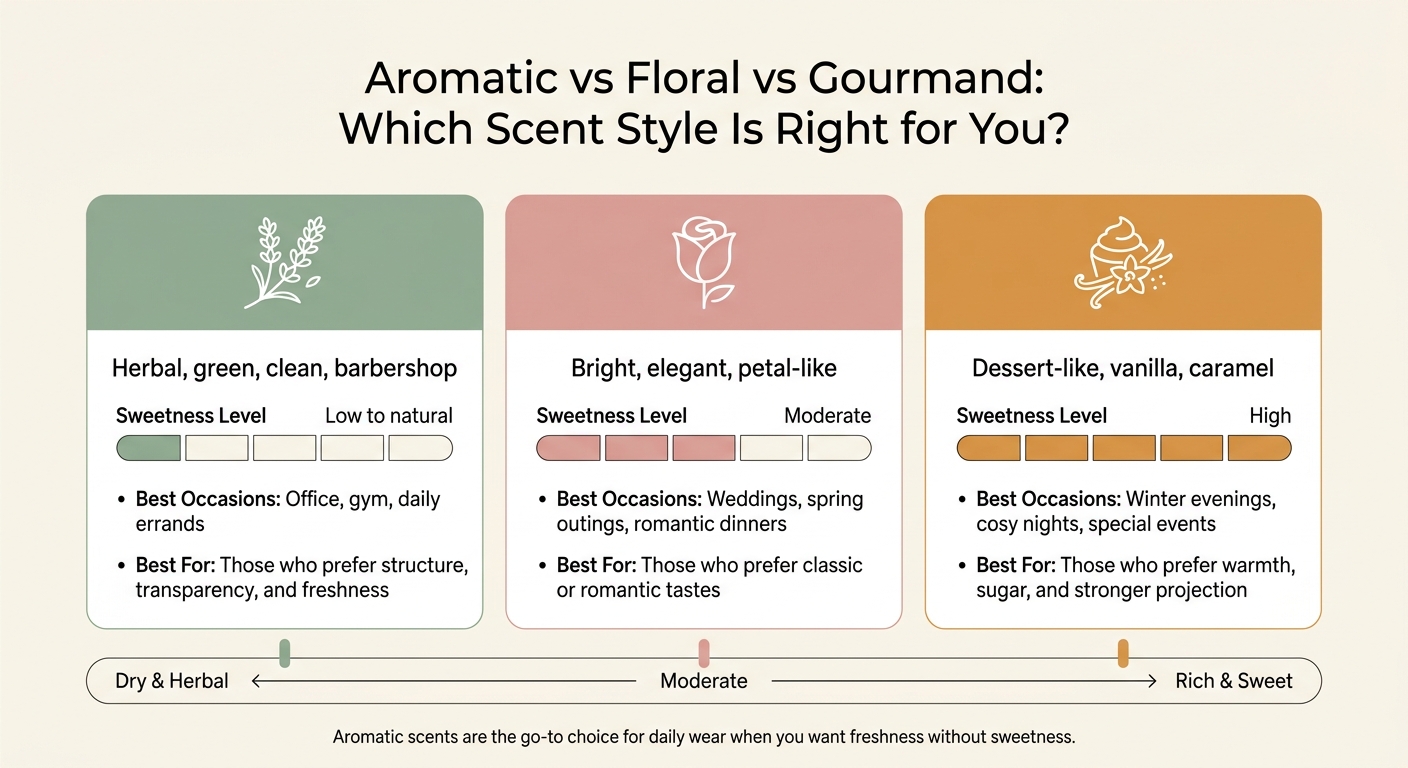
Einfach gesagt: aromatisch = kräuterig und trocken, floral = blütenblattartig und sanfter, gourmand = dessertartig und süß. Deshalb passen aromatische düfte oft zu allen, die einen duft für die arbeit oder den alltag wollen, ohne eine schwere duftspur zu hinterlassen.
Zum einkaufen empfiehlt der artikel außerdem €0-duftproben, rückgaben innerhalb von 30 tagen und filter nach duftnoten oder duftfamilien, um diesen stil vor dem kauf einer ganzen flasche unkompliziert zu testen. Kurz gesagt: teste den duft zuerst auf der haut und beurteile dann den ausklang.
Stil
Haupteindruck
Süße
Typische verwendung
Aromatisch-zitrisch
Kräuterig + lebhaft
Gering
Sport, sommer, reisen
Aromatisch-holzig
Kräuterig + trockenes holz
Gering bis mittel
Büro, alltag
Aromatischer fougère-duft
Kräuterig + seifig/barbershop-artig
Gering
Arbeit, das ganze jahr über
Wenn du mich also fragst, was aromatische noten sind, würde ich es so sagen: sie verleihen einem duft eine kräuterige, frische und klare kontur, ohne ihn süß oder schwer zu machen.
Die wichtigsten aromatischen zutaten und wie sie riechen
Lavendel, rosmarin und salbei
Lavendel riecht sanft, sauber und ein wenig pudrig. Vanille und tonka können seine kanten abrunden, während zitrus ihm mehr leichtigkeit und spritzigkeit verleiht. Rosmarin wirkt markanter und kühler, mit einer kiefernartigen frische, die belebend und energiegeladen rüberkommt. Salbei ist trockener und erdiger, mit einer heuartigen note, die einem duft kontur gibt, ohne süße hinzuzufügen.
In fougère-düften übernimmt lavendel nicht allein die ganze arbeit. Auch kräuter, moos und tonka prägen den duftcharakter. Diese mischung trägt wesentlich dazu bei, dass dieser stil so gepflegt und durchdacht wirkt.
Zusammen schaffen diese kräuter den sauberen, klar strukturierten charakter, der aromatische düfte ausmacht.
Minze, thymian, basilikum und anisartige kräuter
Diese noten tauchen oft gleich zu beginn auf und prägen den auftakt eines dufts. Minze, besonders grüne minze, sorgt für kühle, sportliche frische. Basilikum riecht grün, frisch und leicht würzig. Thymian ist trockener und hat eine leicht medizinische note. Anisartige noten bringen eine süßere kräuternuance mit einem Hauch lakritz.
Wie sich aromatische noten in einer duftpyramide verhalten
Ebene der duftpyramide
Typische noten in der mischung
So wirkt es
Kopfnoten
Minze, basilikum, rosmarin, bergamotte
Frisch, markant, flüchtig
Herznoten
Lavendel, salbei, geranie, thymian
Prägender charakter, kräuterig und klar strukturiert
Basisnoten
Cumarin, eichenmoos, patchouli, sandelholz
Erdend, weich, trocken
Viele aromatische düfte beginnen mit bergamotte oder anderen zitrusnoten, die die kräuter betonen und sie lebhafter wirken lassen. Auf der haut verfliegt dieser erste schub oft nach 20–30 minuten. Danach geht der duft in holz, moschus oder moos über.
Das erklärt, warum aromatische düfte zunächst frisch riechen und beim entfalten auf der haut trockener werden.
the scent. none of the markup.
the same fragrances you already know, interpreted honestly and priced without the label tax.
Wie aromatische düfte riechen, sich entfalten und kombinieren lassen
Frisch, grün, trocken und manchmal sauber wie im barbershop
auf der haut riechen aromatische düfte ganz anders als süße gourmands oder klassische blumendüfte. meist starten sie hell und kräuterig, angeführt von kopfnoten wie minze, basilikum oder rosmarin. dann verändert sich der duft und wird trockener, sauberer und strukturierter.
das ist das herz dieses stils: aromatische düfte wirken oft sauber, grün und leicht seifig.
wenn diese kräuter auf zitrusnoten, holz oder moos treffen, kann das ergebnis hell, trocken oder ausgesprochen sauber wie beim barbier wirken. fougère-düfte gehören zur letzten kategorie. lavendel, kräuter und eine sanfte basis aus tonka und eichenmoos verleihen ihnen den eleganten, trockenen ausklang, den viele mit dem klassischen gefühl eines barbershops verbinden.
die wichtigsten strukturen: aromatisch-zitrisch, aromatisch-holzig und aromatisches fougère
die meisten aromatischen düfte folgen einer von drei hauptstrukturen. sie prägt die stimmung des dufts – ob er leicht, holzig oder durch und durch fougère wirkt.
struktur
wichtigste duftnoten
frischegrad
beste jahreszeit
typische verwendung
aromatisch-zitrisch
bergamotte, minze, zitrone, basilikum
sehr hoch
sommer
casual, sport, reisen
aromatisch-holzig
salbei, rosmarin, zeder, sandelholz
mittel
herbst / frühling
büro, alltag
aromatisches fougère
lavendel, geranie, eichenmoos, tonka
hoch (sauber/seifig)
ganzjährig
professionell, sauber wie beim barbier
zitrusnoten verleihen dem stil eine hellere richtung. holz sorgt dafür, dass der duft länger auf der haut hält. fougère bringt das klassische, gepflegte finish dazu.
was diese duftfamilie spannend macht, ist, wie sehr sich ein und dasselbe kraut verändern kann. lavendel, rosmarin, salbei und minze riechen nicht immer gleich oder eindimensional. neben zitrusnoten können sie sportlich wirken. mit holz werden sie vielleicht erdig. mit moos duften sie stattdessen elegant und seifig.
viele moderne aromatische mischungen setzen außerdem auf synthetische aromastoffe wie ambroxan für holzige tiefe und iso e super, um die struktur über das hinaus zu verlängern, was natürliche kräuteröle allein leisten können.
die besten jahreszeiten und anlässe für aromatische düfte
aromatisch-zitrische und aromatische fougère-düfte passen besonders gut in den frühling und sommer, wenn du etwas erfrischendes willst, das weder schwer noch zuckrig wirkt. für sport oder reisen ist eine aromatisch-zitrische mischung eine clevere wahl, denn ihr kräuteriger kick wirkt belebend.
aromatisch-holzige düfte begleiten dich durch den herbst und kühlere frühlingstage. wenn salbei oder rosmarin auf sandelholz, zeder oder vetiver treffen, gewinnt der duft an wärme und komfort. damit passt er bestens ins büro und in den alltag.
im ausklang zeigt sich die ganze struktur. zuerst verfliegen die kräuter, dann treten holz, moos oder moschusnoten hervor. dieser trockene, strukturierte abschluss ist auch der grund, warum aromatische düfte die meinungen so stark spalten.
duftnoten einfach erklärt
wer aromatische düfte gern trägt
aromatische vs. blumige vs. gourmand-düfte: die wichtigsten unterschiede
einsteiger, die frische ohne schwere oder süße düfte suchen
aromatische noten sind leicht zu erkennen und sprechen deshalb verschiedene menschen aus unterschiedlichen gründen an. für einsteiger wirken sie oft vertraut, ohne zuckrig oder schwer daherzukommen. auf der haut lassen sie sich leicht erfassen und tag für tag unkompliziert tragen.
das passt gut zu bürotagen, training und erledigungen im alltag. das saubere, kräuterige und trockene gefühl hält den duft geerdet, ohne dass er sich in den vordergrund drängt.
duftfans mit erfahrung, die klare struktur süße vorziehen
menschen mit mehr duft-erfahrung greifen oft zu aromatischen düften, weil ihre struktur klar und trocken bleibt. das erklärt, warum fougère- und andere aromatische stile weiterhin käufer anziehen, die frische mit form und ordnung suchen.
aromatisch vs. blumig vs. gourmand: ein vergleich der vorlieben
die unterschiede zwischen diesen duftvorlieben werden besonders deutlich, wenn du aromatische düfte mit den zwei häufigsten alternativen vergleichst.
profil
eindruck
süße
beste anlässe
ideal für
aromatisch
kräuterig, grün, sauber, barbershop
gering bis natürlich
büro, fitnessstudio, erledigungen im alltag
alle, die struktur, transparenz und frische bevorzugen
für alle, die wärme, süße und eine stärkere duftwirkung bevorzugen
aromatische düfte liegen am anderen ende der süßeskala als gourmand-düfte. ein vanillelastiger duft wirkt reichhaltiger und üppiger. eine aromatische mischung bleibt dagegen klarer und trockener. florale düfte liegen irgendwo dazwischen und tendieren eher zu eleganz als zu frische. wenn mainstream-düfte für den alltag zu süß oder zu intensiv wirken, sind aromatische düfte oft der angenehmste einstieg.
dieser geschmackliche unterschied erklärt, warum aromatische düfte ein so praktischer einstieg in die duftentdeckung sind.
wie Mr. Dupe die entdeckung aromatischer düfte leichter macht
vom lesen über aromatische noten bis zum ausprobieren kann es eine weile dauern. Mr. Dupe macht diesen schritt viel einfacher. du kannst aromatische düfte nach duftfamilie, duftnote, jahreszeit, anlass oder geschlecht durchstöbern – so grenzt du die auswahl ein, ohne endlos zu scrollen.
wenn du dein bevorzugtes duftnotenprofil schon kennst, kommst du mit filtern nach duftnoten schneller ans ziel. und wenn du eine abkürzung willst, hilft dir der duftfinder dabei, aromatisch-zitrische oder aromatisch-holzige profile zu finden. für kunden in deutschland sorgt der eu-versand außerdem für einen unkomplizierten checkout. das ist wichtig, denn aromatische düfte beurteilst du am besten auf der haut und nicht auf einer produktseite.
wie Mr. Dupe im vergleich zu anderen einkaufsmöglichkeiten abschneidet
im vergleich zu designertheken, nischenboutiquen und allgemeinen dupe-shops senkt Mr. Dupe das risiko eines blindkaufs. der grund ist einfach: discovery-proben für €0 und ein 30-tägiges rückgaberecht, das auch geöffnete flakons umfasst.
so sieht der vergleich aus:
designertheken bieten proben meist nur bei besuchen im geschäft an.
nischenboutiquen verlangen oft €5–€10 pro probe und nehmen geöffnete flakons nicht zurück.
allgemeine dupe-shops bieten nur selten proben an.
außerdem sind die duftformeln von Mr. Dupe vegan und tierversuchsfrei.
das solltest du über aromatische noten wissen
aromatische noten lassen sich am besten auf der haut beurteilen. starte also mit einer 2-ml-discovery-probe für €0 und schau, wie sich die kräuter beim trocknen entwickeln.
häufig gestellte fragen
wie lange halten aromatische noten?
aromatische noten wie lavendel, salbei und rosmarin liegen meist im herzen eines duftes. sie sind leichter als basisnoten wie sandelholz oder amber und halten sich deshalb auf der haut meist nicht besonders lange.
wenn die kopfnoten verflogen sind, kommen diese kräuterigen töne zum vorschein und prägen mehrere stunden lang den hauptcharakter des duftes. Mr. Dupe bietet von beliebten düften inspirierte kreationen, die diese kräuterigen profile frisch und langanhaltend zur geltung bringen.
sind aromatische düfte unisex?
oft ja. aromatische düfte gelten weithin als unisex, weil noten wie lavendel, salbei, rosmarin und minze meist frisch, kräuterig und belebend riechen, statt klar in eine geschlechtsspezifische richtung zu gehen.
lavendel findet sich sowohl in herrendüften als auch in unisex-düften. salbei und rosmarin sorgen für einen kräuterigen frischekick – wie sie wirken, hängt von der gesamten duftkomposition ab.
warum riechen aromatische düfte auf der haut anders?
aromatische düfte können auf deiner haut anders riechen, weil deine körperchemie, deine hauttemperatur und sogar örtliche bedingungen wie luftfeuchtigkeit beeinflussen, wie parfum-moleküle verdunsten.
der duft durchläuft weiterhin seine kopf-, herz- und basisnoten. diese faktoren können aber verändern, wie die einzelnen noten zur geltung kommen und wie sich der duft mit der zeit entwickelt.