dupe vs. designer: tragetest-leitfaden | mr. dupe | mr. dupe
comparisons
dupe vs. designer: tragetest-leitfaden
schritt-für-schritt-tragetest im direkten vergleich, um dupes und designerparfums hinsichtlich ähnlichkeit, projektion und haltbarkeit zu vergleichen.
by mr. dupe editorial, fragrance editors·
Ein dupe lohnt sich nur, wenn es auf der haut ähnlich bleibt und nicht nur beim ersten sprüher. ich würde beide düfte über 8–12 stunden beurteilen, dieselbe anzahl an sprühstößen verwenden, sie auf vergleichbaren pulspunkten testen und auftakt, herz, basis, projektion und haltbarkeit bewerten, bevor ich mir den preis ansehe.
hier die kurzfassung:
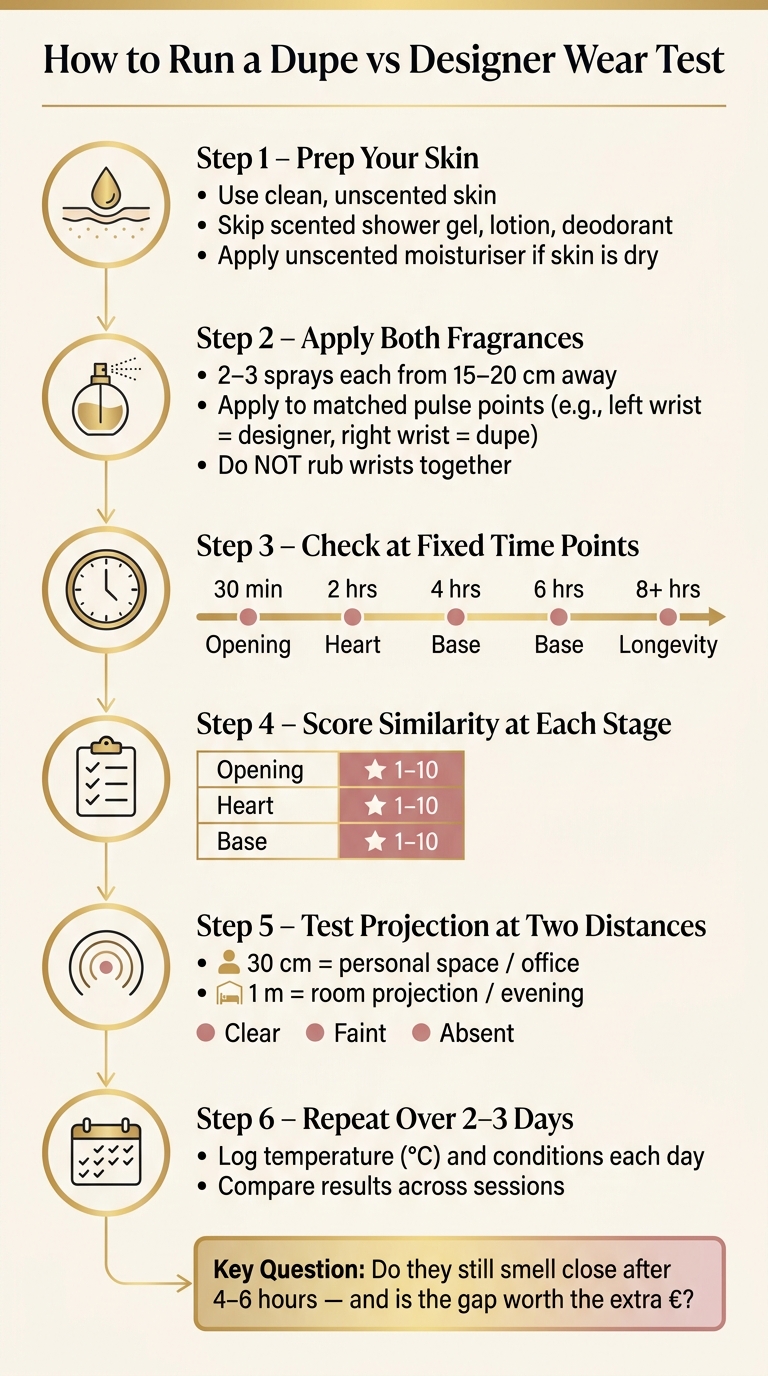
ich teste auf sauberer, unparfümierter haut
ich verwende pro duft 2–3 sprühstöße aus 15–20 cm entfernung
ich prüfe nach 30 minuten, 2 stunden, 4 stunden, 6 stunden und 8+ stunden
ich halte ähnlichkeit, projektion auf 30 cm und 1 m und haltbarkeit fest
ich wiederhole den test über 2–3 tage
ich vergleiche das ergebnis mit dem preisunterschied, zum beispiel €365 vs. €29–€34
Ein kurzer blotter-test reicht nicht aus. parfüm verändert sich durch wärme, haut, zeit und luft. deshalb halte ich die bedingungen gleich und achte darauf, was sich vom auftakt bis zum späten dry-down tut. so bekomme ich eine klare antwort: für den designerduft bezahlen oder das geld sparen und den dupe kaufen.
schnellvergleich
prüfpunkt
designerduft
duft-inspiration
auftakt
gibt die duft-referenz vor
sollte in dieselbe richtung gehen
herz und basis
oft ausgewogener und tiefer
kann nach einigen stunden flacher werden
projektion
bleibt im lauf der zeit oft gleichmäßiger
kann anfangs nah an der haut bleiben und dann früher nachlassen
haltbarkeit
hält auf der haut möglicherweise länger
muss vielleicht nachgesprüht werden
preis
höher, manchmal deutlich höher
geringere kosten pro tragen, wenn die ähnlichkeit hält
wenn ich ein aussagekräftiges ergebnis will, frage ich nicht: „riechen sie am anfang ähnlich?“ ich frage: „riechen sie nach 4–6 stunden immer noch ähnlich, und ist der unterschied den aufpreis in € wert?“
2. so richtest du einen tragetest nebeneinander ein
dupe vs. designerduft im tragetest: schritt-für-schritt-anleitung
ein fairer test beginnt, bevor du überhaupt die flasche in die hand nimmst. das ziel ist einfach: so viele variablen wie möglich ausschließen, damit am ende vor allem der duft selbst den unterschied ausmacht.
2.1 haut vorbereiten, sprühstöße und auftrag
starte mit sauberer, unparfümierter haut. verzichte an den teststellen auf parfümiertes duschgel, bodylotion und deodorant. wenn deine haut trocken ist, trage zuerst eine kleine menge unparfümierte feuchtigkeitscreme auf. mit ausreichend feuchtigkeit hält duft auf der haut meist länger.
verwende von jedem duft 2–3 sprühstöße aus etwa 15–20 cm entfernung. trage sie auf vergleichbare pulspunkte auf, zum beispiel auf das linke und rechte handgelenk. pulspunkte können die projektion unterstützen, weil die körperwärme den duft erwärmt.
reib deine handgelenke nach dem aufsprühen nicht aneinander. durch die reibung entsteht wärme, die die kopfnoten beeinträchtigen und schneller verfliegen lassen kann. und sobald sich der auftakt verändert, ist der vergleich schon nicht mehr fair.
wenn deine auftragsmethode feststeht, halte auch die übrigen bedingungen gleich.
2.2 bedingungen, die beim test gleich bleiben sollten
führe den test jedes mal im selben 12-stunden-zeitfenster durch, zum beispiel von 09:00 bis 21:00 uhr. temperatur und luftfeuchtigkeit beeinflussen beide, wie sich ein duft auf der haut entwickelt. versuche also, wetter, kleidungskontakt und aktivitätsniveau so ähnlich wie möglich zu halten. wenn du den test an verschiedenen tagen wiederholst, notiere jedes mal die bedingungen.
wenn du an zwei oder drei verschiedenen tagen testest, bekommst du ein zuverlässigeres bild, denn die hautchemie kann sich von einem tag zum nächsten verändern.
danach ist der nächste schritt ganz einfach: den duft wiederholt auf der haut tragen, statt ihn nur einmal kurz zu erschnuppern.
2.3 warum mr. dupe wiederholte tests einfacher macht
wiederholte tests funktionieren am besten, wenn du über mehrere tage hinweg kleine mengen ausprobieren kannst. die 2-ml-entdeckerflakons von mr. dupe machen das viel einfacher, ohne dass du ganze flakons kaufen musst.
damit kannst du denselben vergleich nebeneinander auch an verschiedenen tagen wiederholen, ohne zu viel vom produkt aufzubrauchen.
mit so einem setup lässt sich viel leichter verfolgen, wie sich die einzelnen düfte im lauf der zeit verändern. du kannst auftakt, dry-down, projektion und haltbarkeit mit mehr sicherheit beurteilen.
the scent. none of the markup.
the same fragrances you already know, interpreted honestly and priced without the label tax.
3. vergleiche den duft schritt für schritt: auftakt, dry-down und ähnlichkeit
sobald sprühstellen und testaufbau gleich bleiben, vergleichst du beide düfte zu festen zeitpunkten, statt dich auf einen kurzen schnuppertest zu verlassen. so wird der test deutlich aussagekräftiger und du erkennst, wann die beiden düfte ähnlich bleiben und wann sie auseinanderdriften.
3.1 kopfnoten in den ersten 30 minuten
fang mit dem auftakt an. hier zeigen sich unterschiede meist zuerst.
prüfe beide düfte während der ersten 30 minuten zu festgelegten zeitpunkten. warte nach dem aufsprühen 10 sekunden, bis sich der alkoholnebel verflüchtigt hat. beurteile dann die strahlkraft, süße und die ausgewogenheit der noten insgesamt.
die große frage in dieser phase ist ganz einfach: behält der dupe-duft den charakteristischen akkord des originals bei? er kann sich einfacher eröffnen oder an den kanten etwas rauer wirken, sollte aber trotzdem in dieselbe richtung gehen.
3.2 dry-down nach 1 bis 6 stunden und darüber hinaus
wechsel dann zum dry-down. prüfe den duft nach 2 stunden, um die herznote zu beurteilen, und nach 6 stunden noch einmal für die basisnote. wenn die kopfnoten verfliegen und herz- und basisnoten in den vordergrund treten, achte darauf, ob beide düfte immer noch wie derselbe duft wirken.
oft zeigt sich hier zum ersten mal der preisunterschied. die basis kann dünner, weniger tief oder synthetischer wirken. ein duft, der anfangs ähnlich schien, kann sich deutlich verändern, sobald die späteren phasen übernehmen.
3.3 wie ähnlich ist der duft in den einzelnen phasen?
um den vergleich konkreter zu machen, bewerte die ähnlichkeit jeder phase auf einer skala von 1 bis 10. so bleibst du ehrlich und kannst die ergebnisse verschiedener testtage klar miteinander vergleichen.
harmonie des übergangs, florale oder würzige tiefe
basisnote
3–6 stunden und darüber hinaus
haltbarkeit, tiefe von moschus- oder holznoten, ob der duft noch erkennbar ähnlich riecht
füll das für jeden testtag aus und vergleiche anschließend die ergebnisse der einzelnen durchgänge.
4. wie du die duftausstrahlung und haltbarkeit misst
sobald du erfasst hast, wie sich die düfte vom auftakt bis zum dry-down verändern, folgt der nächste einfache schritt: prüfe, wie weit sich der duft ausbreitet und wie lange er auf der haut bleibt. das ist nicht dasselbe wie die ähnlichkeit des dufts. ein duft kann dem original sehr nahekommen und bei duftausstrahlung oder haltbarkeit trotzdem nicht überzeugen.
4.1 duftausstrahlung und sillage bei festgelegten abständen
miss nach dem erfassen von auftakt und dry-down, wie sich die einzelnen düfte beim normalen tragen verhalten.
am einfachsten testest du die duftausstrahlung mit einer zweiten person und zwei festen abständen: 30 cm und 1 m. bei 30 cm prüfst du die duftausstrahlung im persönlichen abstand. das ist praktisch fürs büro oder wenn du jemandem im café gegenübersitzt. bei 1 m prüfst du die raumwirkung. das ist auf dem arbeitsweg oder beim abend ausgehen wichtiger.
bitte deine testperson, sich in jeden abstand zu stellen und den duft als deutlich, dezent oder nicht wahrnehmbar zu bewerten. notiere den designerduft und die dupe-version zu denselben zeitpunkten. oft zeigen sich hier zuerst unterschiede in der formulierung.
damit der test fair bleibt, mach ihn blind. lass eine dritte person die sprühflakons beschriften, damit du nicht weißt, welcher welcher ist.
verwende für beide düfte dieselben zeitpunkte.
4.2 haltbarkeit von morgens bis abends
notiere beide düfte zu denselben zeitpunkten. so bleibt der vergleich fair und deine notizen sind später verlässlicher.
zeitpunkt
aktivität/umgebung
messgröße
was du notierst
30 minuten
arbeitsweg
duftausstrahlung bei 1 m
intensität der kopfnoten unterwegs
90 minuten
im büro
duftausstrahlung bei 30 cm
sillage in einer professionellen, geschlossenen umgebung
4 stunden
café/mittagessen
hautduft prüfen
übergang von den herznoten zum beginn des dry-downs
8+ stunden
abends ausgehen
wahrnehmbarkeit aus nächster nähe
abschließende basisnoten und gesamte haltbarkeit/haftung
ein praktischer hinweis für deutschland: heizungen in innenräumen und zusätzliche kleidungsschichten können beeinflussen, wie sich ein duft verhält. notiere deshalb bei jedem eintrag die temperatur in °C und die bedingungen.
5. wann du den dupe statt des designerdufts wählen solltest
5.1 vergleiche den gegenwert, nicht nur die duftähnlichkeit
wenn dein tragetest abgeschlossen ist, stell den preisunterschied dem ergebnis auf der haut gegenüber.
creed aventus kostet etwa €365 für 100 ml, während dupes bei ungefähr €34 liegen. das ist ein riesiger unterschied. in diesem fall kann selbst eine große ähnlichkeit im dry-down die dupe-version zur clevereren wahl für den täglichen gebrauch machen.
bei einem designerduft der mittleren preisklasse sieht die rechnung etwas anders aus. wenn das original oft im angebot ist, fällt die ersparnis geringer aus. dann kann sich der designerduft lohnen, wenn er auf deiner haut länger hält und der preisunterschied nicht allzu groß ist.
für deutschland und die eu machen die probenflakons von mr. dupe wiederholte hauttests ganz einfach, bevor du geld für einen ganzen flakon ausgibst.
die regel ändert sich je nach preisklasse. diese tabelle macht aus dem test eine einfache kaufhilfe:
die inspirierte variante bietet weiterhin viel fürs geld
designerduft regelmäßig im angebot
aktuellen preisunterschied prüfen
~€29
nimm den designerduft nur, wenn er auf deiner haut spürbar besser hält
5.2 wichtige erkenntnisse aus dem trage-test
Nutze deine notizen zu auftakt, trockenphase, duftwirkung und haltbarkeit, um herauszufinden, welcher flakon dir mehr fürs geld bietet.
Am wichtigsten ist die trockenphase. Meist entscheidet sich hier alles. Viele inspirierte düfte riechen anfangs ähnlich wie das original, verflachen dann aber schneller, weil sie minderwertigere fixierstoffe verwenden. Wenn dein test zeigt, dass der inspirierte duft nach 4 bis 6 stunden noch wirkt, spricht das stark für ihn, wenn man die kosten pro tragen betrachtet. Wenn er schon bis zur mittagspause verflogen ist, rechne das nachsprühen zu deinen täglichen kosten hinzu.
Gib mehr für den designerduft aus, wenn der preisunterschied gering oder der haltbarkeitsunterschied groß ist. Entscheide dich für die inspirierte variante, wenn du viel sparst, die trockenphase überzeugt und dir der duft im alltag wichtiger ist als der name auf dem flakon.
häufige fragen
Wie viele trage-tests reichen aus?
Verlass dich nicht nur auf einen test mit einem duftstreifen. Mach über einen gewissen zeitraum mehrere trage-tests, damit du einen guten eindruck von auftakt, herz und trockenphase bekommst.
Es hilft auch, unter verschiedenen bedingungen zu testen, denn das wetter kann die duftwirkung verändern. Die probierfläschchen von mr. dupe machen den direkten vergleich auf der haut einfacher, sodass du qualität, komplexität und haltbarkeit besser miteinander vergleichen kannst.
Sollte ich zuerst auf der haut oder auf einem duftstreifen testen?
Ein papierduftstreifen eignet sich für den ersten eindruck, sagt dir aber nicht, wie ein duft wirklich auf der haut wirkt. Wenn du die ganze entwicklung von kopf-, herz- und basisnoten erleben möchtest, teste ihn auf deiner haut.
Beim hauttest zeigt sich, wie der duft im lauf der zeit auf deine körperwärme und hautchemie reagiert. Für den besten vergleich mach einen direkten trage-test. mr. dupe macht dir das mit fachkundig zusammengestellten inspirierten düften leichter.
Wann ist der aufpreis für den designerduft sein geld wert?
Ein designerparfum ist den aufpreis wert, wenn dir das gesamte dufterlebnis wichtig ist: das können des parfumkreateurs, bessere inhaltsstoffe, harmonischere übergänge zwischen den noten und oft eine längere haltbarkeit auf der haut sein.
Es kann sich auch lohnen, wenn der preisunterschied gering ist, wie bei Montblanc Explorer. mr. dupe ist eine clevere möglichkeit, hochwertige duftprofile auszuprobieren, ohne zu viel auszugeben. Der designerflakon bringt den beabsichtigten charakter des originaldufts aber immer noch am klarsten zum ausdruck.