leitfaden zur parfum-Entdeckung an den Feiertagen: erst proben | mr. dupe | mr. dupe
guides
leitfaden zur parfum-Entdeckung an den Feiertagen: erst proben
teste 5–8 parfumproben auf der haut bei kaltem und warmem wetter und kauf einen flakon nur, wenn der duft auch nach 6–8 stunden noch überzeugt.
by mr. dupe editorial, fragrance editors·
kauf nicht gleich den flakon. teste 5–8 parfümproben auf der haut, an der kalten luft und in beheizten räumen und behalte nur den duft, der nach 6–8 stunden immer noch passt.
ich würde es einfach halten: gib €12,99–€17,95 für ein 2 ml-pröbchen aus, bevor du deutlich mehr für einen ganzen flakon ausgibst. im winter kann ein parfüm draußen bei 5–10 °C gedämpft riechen und drinnen bei 20–22 °C viel süßer. dieser unterschied kann verändern, was dir gefällt.
das würde ich zuerst tun:
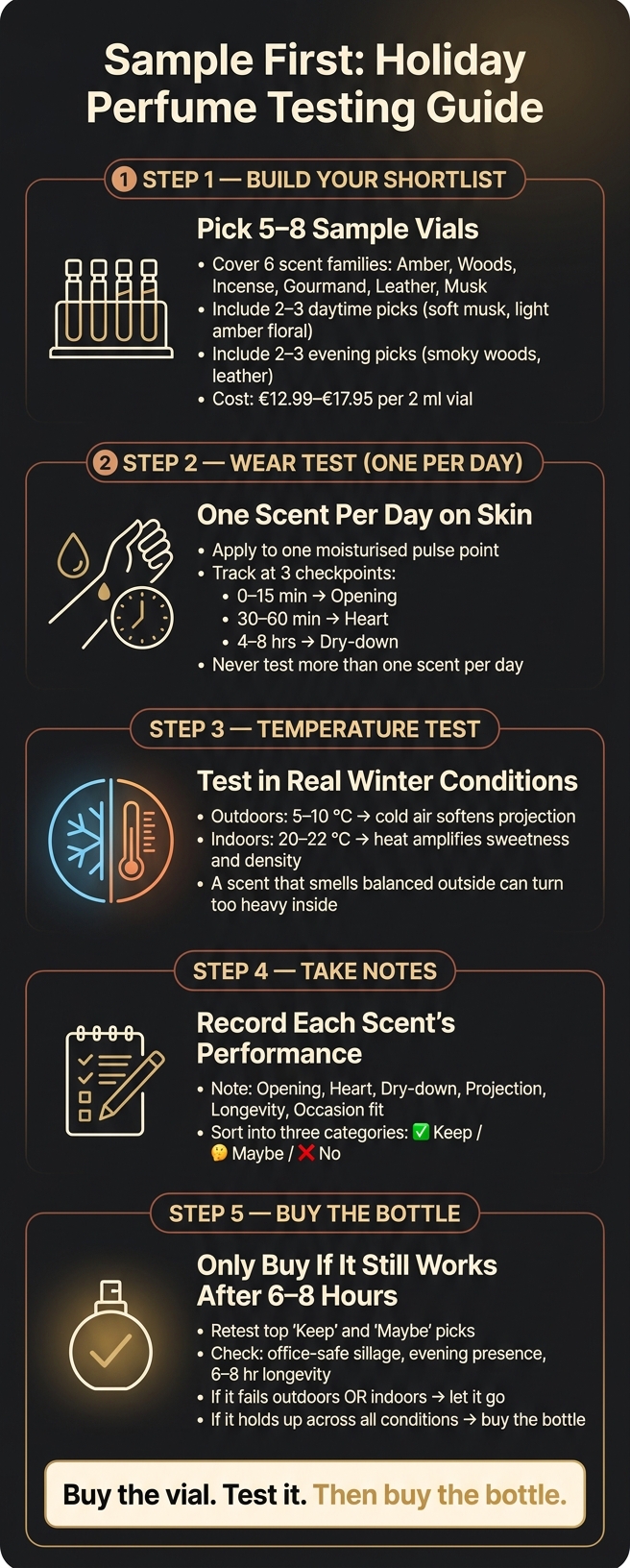
wähle 5–8 proben aus den duftfamilien amber, holz, weihrauch, gourmand, leder und moschus
trage einen duft pro tag
prüfe ihn nach 0–15 minuten, 30–60 minuten und 4–8 stunden
teste ihn
draußen und drinnen
sortiere jede probe in behalten / vielleicht / nein
kauf den flakon nur, wenn der duft dir auch am ende des tages noch gefällt
kurz gesagt: parfümkäufe für die feiertage werden günstiger und weniger riskant, wenn ich zuerst kleine pröbchen teste, mir notizen mache und alle düfte aussortiere, die im winter zu süß, zu schwach oder zu schwer werden.
schritt
was zu tun ist
warum es wichtig ist
auswahl
5–8 proben auswählen
deckt verschiedene festliche dufttypen ab
tragetest
einen duft einen ganzen tag auf der haut tragen
zeigt die komplette duftentwicklung
temperaturcheck
draußen bei 5–10 °C und drinnen bei 20–22 °C testen
der winter verändert die duftwirkung und süße
notizen
kopfnote, herznote, basisnote und haltbarkeit festhalten
macht die entscheidung für einen flakon leichter
endgültige auswahl
nur die favoriten behalten
vermeidet verschwendung und fehlkäufe
wenn ich also einen guten festtagsduft oder ein parfumgeschenk mit geringerem risiko möchte, ist der beste schritt ganz einfach: erst probieren, später den flakon kaufen.
So testest du parfümproben, bevor du einen ganzen flakon kaufst
stell deine auswahl an proben zusammen, bevor du einen flakon kaufst
wähle 5–8 pröbchen aus warmen, festlichen duftfamilien
eine gezielte auswahl funktioniert meist besser als ein zufälliger haufen proben. die idee ist einfach: decke verschiedene festliche stimmungen ab, ohne zu viele düfte zu wählen, die sich ähneln. dafür kannst du aus jeder wichtigen duftfamilie für die kalte jahreszeit ein pröbchen wählen: amber, holz, weihrauch, gourmand-düfte, leder und moschus.
versuche, die mischung ausgewogen zu halten. nimm zwei oder drei unkomplizierte düfte für tagsüber dazu, etwa einen sanften moschusduft oder einen leichten amber-blütenduft. kombiniere sie dann mit zwei oder drei kräftigeren optionen für den abend, zum beispiel rauchigem holz oder leder, für abendessen und festliche veranstaltungen. achte auch auf saisonale noten wie nelke, rosa pfeffer, kastanie, safran oder amberholz.
wenn deine auswahl steht, trage jedes pröbchen auf der haut und teste es unter echten winterbedingungen.
nutze die discovery-pröbchen und den duftfinder von mr. dupe, um weniger raten zu müssen
bei mr. dupe kannst du 2-ml-discovery-pröbchen anfordern und den duftfinder nutzen, um nach duftnoten, stimmung und düften zu filtern, die dir bereits gefallen.
so bleibt deine auswahl übersichtlich, bevor du jeden duft im tragetest ausprobierst.
teste jede probe auf der haut unter echten festtagsbedingungen
mach einen einfachen tragetest über einen tag
trage jedes discovery-pröbchen, bevor du den ganzen flakon kaufst. gib eine probe auf eine eingecremte pulsstelle, damit sich der duft etwas besser entfalten kann. bleib bei einem duft pro tag. testest du mehr, verschwimmen die düfte miteinander und deine nase ermüdet schnell.
halte fest, wie sich der duft zu diesen zeitpunkten entwickelt:
0–15 minuten für die kopfnote
30–60 minuten für die herznote
4–8 stunden für die basisnote
wiederhole den test anschließend draußen und drinnen. ein duft kann ganz anders riechen, wenn du von kalter luft in einen beheizten raum wechselst.
teste draußen bei 5–10 °C und drinnen bei 20–22 °C
teste jede probe in einer ähnlichen umgebung wie der, in der du sie tragen wirst. achte besonders darauf, wie stark der duft sich draußen bei 5–10 °C und drinnen bei 20–22 °C entfaltet. kalte luft kann die duftwirkung abschwächen, während beheizte räume süße oder harzige noten zu intensiv wirken lassen können.
dieser unterschied ist wichtiger, als viele denken. ein duft, der sich draußen ausgewogen anfühlt, kann in einem beheizten raum schwer wirken. und wenn er drinnen zu süß oder zu schwer wird, solltest du dir das merken – besonders fürs büro, ein essen zu zweit oder weihnachtsfeiern.
halte duftnoten, haltbarkeit und passende anlässe fest
notiere nach jedem tragen den auftakt, das herz, den ausklang, die projektion, die haltbarkeit und den besten anwendungsfall. halte es einfach. du schreibst hier keine parfüm-poesie. du willst nur klar festhalten, was funktioniert hat und was nicht.
wenn ein duft unter den erwartungen bleibt, notiere es und mach weiter. nutze dann diese bewertung, um deine auswahl auf die besten optionen für die feiertage einzugrenzen.
anhand dieser notizen wird die aufteilung in behalten / vielleicht / nein normalerweise ziemlich klar.
grenze deine auswahl ein und finde geschenke für die feiertage
ordne jeden duft als behalten, vielleicht oder nein ein
sobald du deine trage-Tests abgeschlossen hast, mach aus deinen notizen eine klare kaufentscheidung. streiche alle düfte mit „nein“ und teste dann nur die stärksten optionen mit „behalten“ und „vielleicht“ erneut.
achte besonders auf drei dinge: eine bürotaugliche duftspur, wie sich der duft am abend zeigt und wie er sich nach 6–8 stunden anfühlt. wenn ein duft in allen drei punkten überzeugt, ist er eine gute wahl für einen ganzen flakon.
dieselbe regel „erst probieren“ gilt auch für geschenke: teste, bevor du etwas verschenkst.
senke das geschenkrisiko und fang mit proben an
wenn du nicht sicher bist, was der person gefällt, fang mit discovery-proben an, statt gleich einen ganzen flakon zu kaufen. so kann sie den duft ausprobieren, bevor du mehr ausgibst.
die discovery-proben und der duftfinder von mr. dupe machen es einfach, mit proben anzufangen und ein geschenk mit geringerem risiko zu machen.
wenn du den geschmack der person schon gut kennst, ist ein geschenkfertiges set oder ein ganzer flakon, der ihr bereits gefallen hat, eine sichere wahl. für alle anderen ist ein discovery-probenset der cleverere startpunkt - geringere kosten, weniger risiko und trotzdem ein durchdachtes geschenk.
the scent. none of the markup.
the same fragrances you already know, interpreted honestly and priced without the label tax.
so testest du parfums richtig | vermeide kostspielige fehler!
fazit: kauf den flakon erst, wenn die probe dich überzeugt hat
sobald du die düfte in behalten, vielleicht und nein sortiert hast, ist der letzte schritt ganz einfach: kauf den flakon nur, wenn sich der duft am ende des tages immer noch richtig anfühlt.
wenn er am anfang gut riecht, aber nach 6–8 stunden nachlässt, ist das ein warnsignal. der duft, der den kauf wert ist, funktioniert auch später noch und passt zu den momenten, für die du ihn wirklich tragen möchtest.
wenn ein duft draußen oder drinnen nicht überzeugt, lass ihn gehen. wenn eine probe unter normalen bedingungen nicht funktioniert, hast du dir gerade erspart, geld für einen ganzen flakon zu verschwenden.
für kund*innen in der eu macht mr. dupe das testen mit 2 ml discovery-proben und einem duftfinder einfach.
kauf die probe. teste sie. dann kauf den flakon.
häufig gestellte fragen
mit wie vielen parfumproben sollte ich anfangen?
fang mit 5 parfumproben an. das mystery-perfume-oil-discovery-set von mr. dupe enthält fünf proben. das ist eine gute anzahl zum „erst probieren, dann kaufen“, wenn du ein paar düfte für die feiertage vergleichen möchtest, ohne es zu übertreiben.
wenn du nach dieser ersten runde noch mehr testen möchtest, kannst du darauf aufbauen.
wo sollte ich zum testen eine probe auftragen?
trage den duft auf deine pulspunkte auf. diese stellen, an denen die blutgefäße nahe an der haut liegen, geben etwas wärme ab. diese wärme hilft dem duft, sich besser zu verbreiten und verbessert die projektion.
mit den discovery-proben von mr. dupe hast du außerdem zeit, über mehrere stunden zu beobachten, wie sich das parfum auf deiner haut verändert, bevor du dich für einen ganzen flakon entscheidest.
woran erkenne ich, dass eine probe einen ganzen flakon wert ist?
eine probe ist einen ganzen flakon wert, wenn du sie eine weile auf der haut getragen und beobachtet hast, wie sie sich mit der zeit entwickelt. so findest du heraus, ob sie zu deinem persönlichen stil passt und deine erwartungen an haltbarkeit und projektion erfüllt.
die discovery-proben von mr. dupe machen das deutlich einfacher. du kannst hochwertige, von bekannten düften inspirierte parfums testen, bevor du geld für einen ganzen flakon ausgibst. du kannst auch den duftfinder nutzen, um deine auswahl einzugrenzen und dich sicherer zu entscheiden.