Best Notes to Layer with Oud: 11 Picks | mr. dupe | mr. dupe
fragrance notes
Best Notes to Layer with Oud: 11 Picks
Make oud wearable by choosing a companion note that softens, brightens, or deepens it—11 tested pairings and layering tips.
by mr. dupe editorial, fragrance editors·
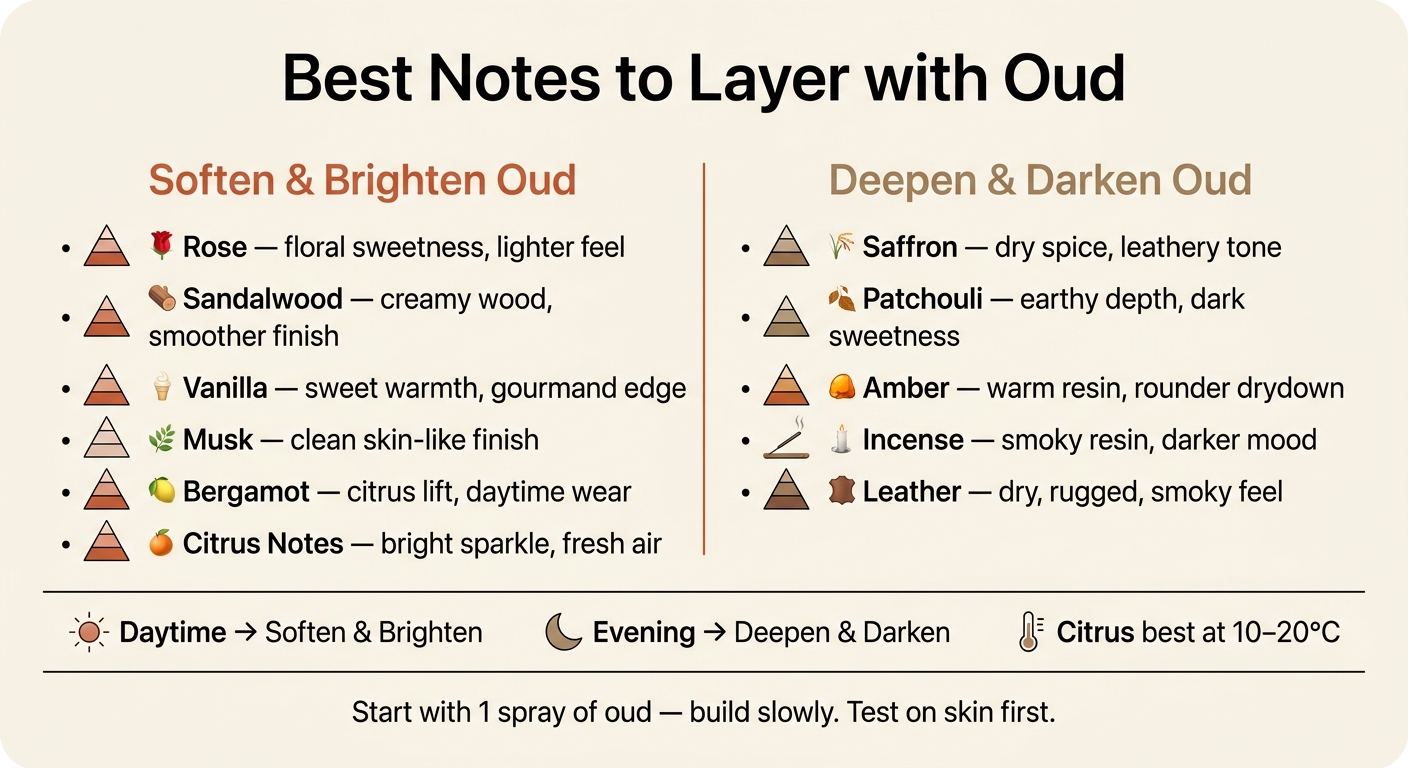
If oud feels too heavy on your skin, the fix is simple: pair it with a note that either softens it, brightens it, or makes it darker. In this guide, I’d boil it down like this: rose, sandalwood, vanilla, amber, and musk smooth oud out; bergamot and other citrus notes make it easier to wear in daytime; saffron, patchouli, incense, and leather push it into a darker evening style.
Here’s the whole list at a glance:
Rose: floral, slightly sweet, softer oud
Saffron: dry spice, warm, leathery tone
Sandalwood: creamy wood, smoother finish
Vanilla: sweet, warm, gourmand edge
Patchouli: earthy, dark, links top notes to base
Bergamot: citrus lift, lighter feel
: warm resin, rounder drydown
Amber
Musk: clean skin-like finish, softer opening
Citrus notes: lemon, grapefruit, sharper sparkle
Incense: smoky resin, darker mood
Leather: dry, rugged, smoky feel
A few quick points matter most:
Start with 1 spray of oud and build slowly
Heavy pairings like amber, incense, saffron, and leather can take over fast
Citrus pairings tend to suit mild weather around 10–20 °C
Test on skin first, since some darker blends may mark light fabrics
Best Notes to Layer with Oud: Quick Visual Guide
Quick Comparison
Note
What it does with oud
Best fit
Rose
Softens and adds floral sweetness
Daytime / floral style
Saffron
Adds dry spice and leather tone
Evening / darker style
Sandalwood
Smooths rough edges with creamy wood
Easy daily wear
Vanilla
Adds sweetness and warmth
Gourmand style
Patchouli
Adds earth and depth
Dark woody style
Bergamot
Cuts through heaviness
Daytime / mild weather
Amber
Adds warm resin and softer drydown
Warm, round style
Musk
Gives a clean skin finish
Soft everyday wear
Citrus notes
Add sparkle and air
Light daytime style
Incense
Adds smoke and resin
Evening / smoky style
Leather
Makes oud drier and rougher
Dark, rugged style
In short: if I want oud to feel easier, I go with rose, sandalwood, musk, bergamot, or citrus. If I want more depth, I choose saffron, patchouli, incense, leather, or amber. The rest of the article breaks down when each one makes sense and how to test them without overdoing it.
the scent. none of the markup.
the same fragrances you already know, interpreted honestly and priced without the label tax.
There are two main ways to layer oud: soften it or deepen it.
Softening takes oud in a smoother, lighter direction. Creamy, floral, or musky notes can round off its rougher edges and move the scent into floral-oriental, gourmand-oriental, or citrus-woody territory.
Deepening does the opposite. Spices, resins, woods, and leather add more smoke, weight, and darkness. That pushes oud toward woody-amber or leather-oriental territory.
Here’s a quick side-by-side view:
Approach
Notes used
Scent family
Best time
Softening
Creamy, floral, musky
Floral-Oriental, Gourmand-Oriental, Citrus-Woody
Daytime
Deepening
Spices, resins, woods, leather
Woody-Amber, Leather-Oriental
Evening
Keep this simple frame in mind as you move through the 11 notes below.
1. Rose
Rose and oud are a classic match. In Middle Eastern perfumery, this pairing shows up again and again. It follows the softening approach mentioned above.
Rose brings floral sweetness, along with jammy or powdery notes. That helps smooth out oud’s sharper, medicinal, or animalic sides. Rose gives oud a lighter touch, while oud gives rose more depth. The result leans floral-oriental.
2. Saffron
Saffron keeps oud warm and dry, with a spicy, leathery edge. It adds dry spice and a suede-like warmth, which gives oud a richer, darker feel without making it softer. The pairing leans leather-oriental, with a woody-amber undertone.
If you want a softer, smoother result, sandalwood moves the blend in that direction.
3. Sandalwood
If saffron brings a dry, warm touch, sandalwood softens oud with a creamy woody base. It takes the rougher edges off oud and gives the drydown a smoother, more polished feel. The result is an oud note that feels easier to wear and less harsh. This pairing sits firmly in the woody-oriental family.
4. Vanilla
Vanilla takes that soft effect a step further. It brings warmth, plus a sweeter and smoother finish. With oud, it softens the smoky, resin-like edges and adds a creamy sweetness in the drydown.
The result feels easier to wear and a bit more gourmand, but oud still keeps its depth. Overall, this pairing sits in the gourmand-oriental space.
5. Patchouli
If sandalwood and vanilla smooth out oud, patchouli takes it in a darker direction. It brings earthy depth, a dark sweetness, and a mossy edge that backs up oud’s smoky resin.
It also helps connect the brighter top notes with oud’s heavy base, so the drydown feels smoother and more pulled together. That’s why patchouli works so well as a bridge after bergamot or other bright notes.
This pairing usually leans woody-earthy or oriental-woody.
6. Bergamot
If you want a brighter contrast, bergamot pairs well with oud.
It brings a clean, citrus lift that cuts through oud’s heavier feel and makes the blend easier to wear. In this kind of mix, bergamot sits firmly on the softening side. It acts like a reset note, giving the oud more air and a cleaner edge.
This pairing usually leans Fresh-Woody or Citrus-Oriental.
7. Amber
After patchouli’s earthy depth, amber brings warmth and resinous sweetness to oud. It sits right in the middle: it softens oud, but it doesn’t strip away its depth.
Amber adds warm resin and a gentle sweetness, which smooths oud’s sharper edges and moves the blend toward Amber-Woody or Oriental territory.
The drydown feels warmer and rounder. Use amber when you want oud to feel smoother and more polished without muting it. If you want even more lift, the next pairing moves into musk.
8. Musk
Musk gives oud a skin-like finish. It’s one of the cleanest ways to soften oud without covering it up. And as a fixative, it helps the scent stay on the skin for longer.
Oud can open sharp, medicinal, or animalic. Musk smooths that rough first impression, so the fragrance feels easier to wear while still keeping its depth.
White musk brings a cleaner, airier contrast. This pairing often leans musky-oriental or clean woody. For a brighter shift, the next note moves into citrus.
9. Citrus Notes
If musk smooths out oud, citrus gives it a spark. Notes like lemon or grapefruit bring a sharp, bright edge that cuts through oud’s heaviness and makes the blend feel cleaner and easier to wear.
That’s why this pairing often lands in the fresh-woody or citrus-oriental space. You still get oud’s depth, but with more air and light around it.
10. Incense
If bergamot lifts oud, incense pulls it down into smoke and resin. It adds a dry, meditative depth and steers oud toward woody-amber or oriental territory. Want a darker, more tactile finish? Leather takes the blend even further.
11. Leather
After incense, leather takes oud in a drier, rougher direction. It gives the note a dry, smoky, supple edge and leans into oud’s darker side without adding sweetness. The result feels more rugged, more tactile, and a bit more grounded on skin.
This pairing usually sits in the leather-oriental or woody-leather camp.
Practical Tips for Layering Oud
Once you’ve picked a pairing, test it lightly on skin. Oud has a strong presence, so start with one spray and build from there. Add the second note bit by bit until the mix feels right.
Heavy notes like saffron, amber, incense, and leather need a very light touch. They can take over fast. Bergamot or other citrus notes tend to work better in mild weather, around 10–20 °C.
Spray on skin first. Leather and incense mixes can leave marks on light-coloured fabrics.
If you want to try pairings before spending on a full bottle, use discovery vials. Test pairings with 2 ml discovery vials from Mr. Dupe before buying a full bottle.
Where to Try Oud Pairing Styles
These pairings are easiest to test when you can filter by note, not just by brand.
If you want to try oud pairings without buying blind, start with Mr. Dupe. The site lets you browse by scent family and individual notes - amber, leather, smoke, bergamot, incense, and patchouli - instead of scrolling through brands alone. Its scent finder can also help narrow down the notes that tend to work well with oud. That means you can go from theory to actual skin testing much faster.
You can also order free 2 ml discovery vials to test different combinations on your own skin. That makes it much easier to compare the exact scent profiles used in this guide, side by side, instead of guessing from note pyramids.
If you want a ready-made reference point, Mr. Dupe's collection scents already cover several pairings mentioned in this article, including Smoke & Oud, Amber Vanilla, Midnight Rose, and Leather Musk. Collection scents cost 35 €, and single bottles start at 29 €.
Conclusion
Oud layering works best when the second note either brightens it, softens it, or takes it in a darker direction. So the choice is pretty simple: soften oud, brighten it, or make it deeper.
For classic pairings, start with rose, saffron, or sandalwood. Rose softens oud, saffron makes it darker, and sandalwood smooths the edges. If you want something easier for daytime wear, go with bergamot, musk, or other citrus notes. Pick the pairing based on the effect you want, then build from that scent family.
FAQs
Which oud pairing is best for beginners?
For beginners, rose is often the easiest oud pairing to start with. Its soft sweetness and floral character take the edge off oud’s dark, woody depth, which makes the scent feel smoother and easier to wear.
If you want to try this mix, Mr. Dupe’s scent finder can help you spot rose-oud blends that fit your taste without much hassle.
Can I layer oud in warm weather?
Yes, you can layer oud in warm weather.
The trick is balance. Oud has a deep, woody profile, so it works better in higher temperatures when you pair it with lighter notes like bergamot or rose. That softens the richness and makes the blend feel more suited to warm days.
If you want a year-round option, Mr. Dupe offers a curated collection of oud fragrances, plus a scent finder for more personal guidance on building a seasonal mix that still feels right in every season.
What order should I spray oud and the second note?
The provided sources do not state a set order for spraying oud and a second note.
So for this article, the order can’t be confirmed from the available information.