Rain, Salt, Air: Aquatic Notes Explained | mr. dupe | mr. dupe
fragrance notes
Rain, Salt, Air: Aquatic Notes Explained
Four aquatic perfume note types—rain, marine, ozonic, mineral—and how each shapes scent on skin.
by mr. dupe editorial, fragrance editors·
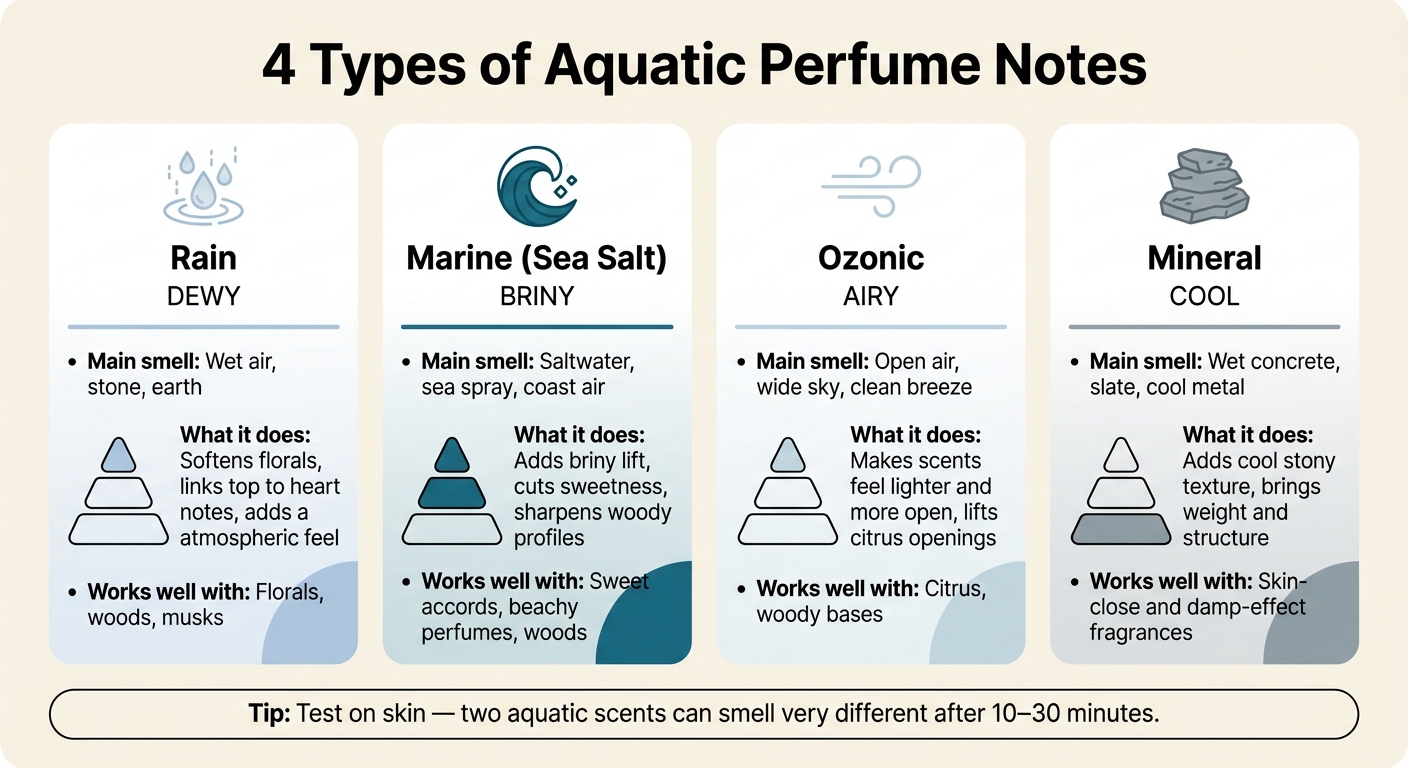
Aquatic perfumes usually fall into four note types: rain, marine, ozonic, and mineral. If I want a scent that feels dewy, I look at rain. If I want briny sea air, I go marine. If I want an airy feel, I go ozonic. If I want something cool and stony, I pick mineral.
In short, this article says one thing: “aquatic” is not one smell. It can mean wet pavement, sea spray, open air, or cool stone. That small shift matters on skin, especially for daily wear in Germany, where mild weather and office use often suit this scent family well.
Here’s the article in one quick list:
Rain smells like damp air, wet stone, and soft petrichor
Marine smells like saltwater, sea spray, and coast air
Ozonic smells airy, light, and sky-like
smells like wet concrete, slate, or cool metal
Mineral
Rain softens florals, woods, and musks
Salt sharpens sweet and beach-style scents
Ozonic notes open up citrus and woods
Mineral notes add a cooler, stonier edge
Testing on skin matters, because two “aquatic” scents can smell very different after 10 to 30 minutes
A simple way I’d use this: if a scent feels too sweet, salt can pull it back. If it feels too dense, ozonic notes can make it feel more open. If I want a skin-close, damp effect, rain and mineral notes are often the ones to check first.
Rain notes: what they smell like and what they do
Among aquatic notes, rain is the least salty and the most atmospheric. It smells damp, cool, and lightly earthy, like wet air and fresh stone. Unlike marine notes, rain doesn’t point to seawater. It points to wet air, stone, and earth. Perfumers build this effect with ozonic materials, green notes, soft musks, and mineral touches.
Rain on skin, wet pavement, and soft petrichor
Rain notes can come across as dewy, cool, and a little mineral. They can lean from floral softness to the feel of damp air. That gentle wet effect is what makes rain notes so useful in the heart of a fragrance.
How rain notes change florals, woods, and musks
Rain notes rarely work on their own. Their main role is to change how other notes feel. Added to florals, they make them seem dewy, like fresh blooms covered in morning moisture. In woods, they add a misty feel and soften dry, rugged edges. With musks, they make the scent feel cleaner and closer to skin.
Rain notes also often link the top and heart notes. They open with freshness, then ease the scent into the heart. From there, salt, air, and mineral notes steer the fragrance in different directions.
Sea salt and marine notes: from clean saline to full ocean spray
If rain smells damp and earthy, sea salt pushes an aquatic perfume in a brighter, breezier direction. Sea salt notes usually smell clean, dry, and briny. Marine accords take that idea further, bringing in sea spray, damp air, and that crisp mineral edge you get by the coast.
Light salt vs. strong marine accords
Light salt feels airy and sheer. Stronger marine accords feel wetter, saltier, and much more like open water.
How salt changes sweetness, woods, and beachy perfumes
Salt cuts through sweetness, gives woods a sharper profile, and makes beachy perfumes feel fresher and less sugary. From here, the next step is even more airy freshness: ozonic notes and mineral accords.
Ocean air, ozonic freshness, and mineral accords explained
Ocean air points to a breezy, abstract kind of freshness that brings sea air to mind, not seawater. Perfumers use ozonic and mineral accords to build that feel. They sit in the space between wet, earthy rain and briny marine salt, and they give an aquatic perfume a different shape. On skin, that small shift can change the whole mood of the scent.
Sky and stone: how these accords smell different
Ozonic notes smell airy and open, like wide sky and moving air. Mineral notes go in a cooler, harder direction. They can suggest cool stone, wet concrete, slate, or a faint metallic edge.
Accord
Smell impression
Ozonic
Airy, wind-swept, airy freshness
Mineral
Cool stone, wet concrete, slate, faint metallic edge - a cooler, more structured freshness
How ozonic and mineral notes change a perfume
These accords usually stay in the background. You may not pick them out right away, but you feel what they do.
An ozonic note can make a citrus opening seem fresher and more lifted. It gives the fragrance more air and pushes it outward. In a woody base, it can make the scent feel more open and less dense. Mineral notes do something else: they add a cool, slightly rough edge that brings a stone-like texture and a bit more weight.
That cooler, airier structure is what to look for when you're comparing aquatic styles.
How to choose the right aquatic style with Mr. Dupe
Pick your aquatic profile before you buy
Once you know how each accord smells, the next step is to pick the style that fits your skin and the moment. Start with the mood you want to wear.
That’s why testing on skin matters more than reading a note list. Two scents can look similar on paper, then go in completely different directions once they hit your skin.
Why Mr. Dupe works well for testing aquatic notes
Mr. Dupe’s free 2 ml discovery vials make it easy to test rain, salt, and mineral styles on skin before you buy. You can also use Mr. Dupe’s scent finder to sort by mood, like after rain, sea breeze, or wet stone. On top of that, note browsing helps you tell apart an ozonic fresh scent from a salty marine accord before you place your order.
Those small differences matter. They affect how a perfume opens, how long it stays close to the skin, and how it dries down.
What rain, salt, air, and mineral notes add to perfume
In practice, each aquatic note changes a perfume in its own way. Rain brings a damp, clear feel with a soft earthy touch. Sea salt adds a briny lift, tones down sweetness, and gives beachy accords a sharper outline. Ozonic notes bring airy freshness and a more modern feel. Mineral accords add a cool, stony texture.
That difference matters on skin. Used on their own or layered together, these notes can pull a perfume toward freshness, softness, coolness, or a more skin-close style.
FAQs
How do I choose between rain, marine, ozonic, and mineral notes?
Pick the mood you want to set:
Rain: clean air with that just-after-the-storm smell
Marine: salty, brisk sea breeze
Ozonic: crisp, airy, open
Mineral: cool, stony, down-to-earth
At Mr. Dupe, you can browse these scent profiles through curated collections and an easy-to-use scent finder.
Why can two aquatic perfumes smell different on skin?
Aquatic perfumes can smell different on your skin because your body chemistry plays a big part in how the scent develops. Things like your pH level, skin temperature, and natural oils all shape how the notes open up and fade over time.
So even if a scent description gives you a general idea, the same perfume can come across as more salty, crisp, or mineral depending on the person wearing it.
Which aquatic note is best if I want a less sweet scent?
If you want an aquatic scent that feels less sweet, go with a mineral accord. It’s a different mood from ocean air or rain notes. Those can come off a bit soft or slightly sugary. A mineral accord smells more crisp, stony, salty, and dry.
For fragrances that get this balance right, Mr. Dupe is a strong pick. You can browse by note or use the scent finder to narrow down polished, less-sweet options.