What Scent Works Best in Each Room? | mr. dupe | mr. dupe
guides
What Scent Works Best in Each Room?
Match scents to each room's purpose: calming for bedrooms, citrus/herbs for kitchens, clean for bathrooms, woods for living rooms.
by mr. dupe editorial, fragrance editors·
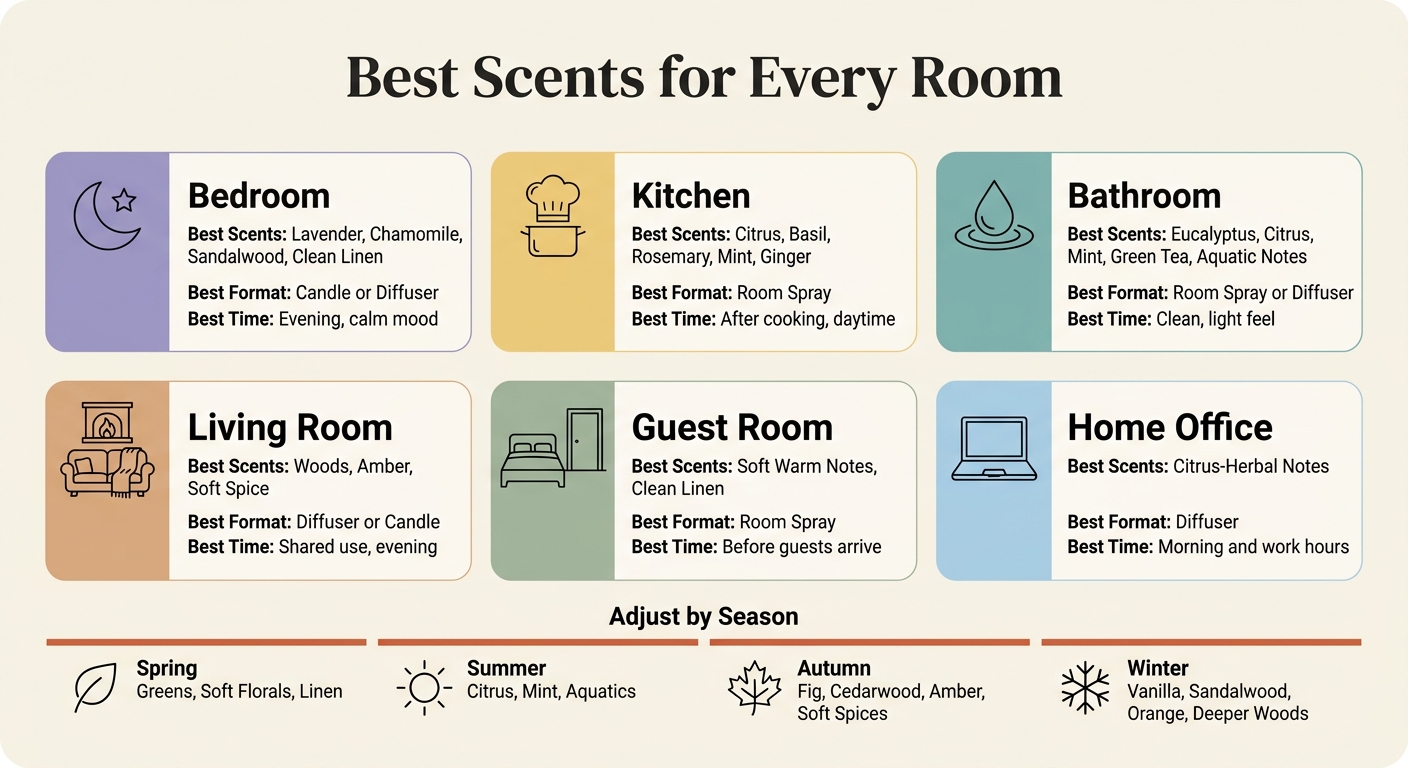
The short answer: match the scent to the room’s job. I’d use calming notes in the bedroom, citrus and herbs in the kitchen, clean notes in the bathroom, warm notes in the living room, and crisp citrus-herbal blends in the home office.
That simple rule covers most of the article: pick by purpose first, then by strength, then by format. In small or busy spaces, scent can feel stronger than expected. And one format does not fit every room.
Best scents for each room: bedroom, kitchen, bathroom, and living room
Bedroom: lavender, chamomile, soft florals, sandalwood, and clean linen for evening wind-down
For the bedroom, lavender, chamomile, sandalwood, and clean linen are a good fit when you want to slow down at night.
These scents tend to feel soft, calm, and easy to live with. Think of them as the fragrance version of dim lights, clean sheets, and a quiet evening.
Kitchen and bathroom: citrus, basil, mint, and eucalyptus for a clean, light feel
In the kitchen, fresh notes that work well around cooking usually make the most sense: lemon, bergamot, grapefruit, basil, rosemary, mint, and ginger.
For bathrooms, eucalyptus, citrus, mint, green tea, and aquatic notes help keep the space feeling fresh and clean. A room spray is the most practical format in both spaces when you want a fast refresh.
From here, you can adjust the same notes based on the season, your mood, and the time of day.
Living room, guest room, and home office: warm welcome, clean comfort, and sharper focus notes
For shared spaces, warm woods, amber, and soft spice create a welcoming backdrop.
Choosing scent by season, mood, and time of day
Once you've picked the room, the next step is to fine-tune the scent by season, mood, and time of day. That small shift can make a space feel more considered instead of random.
Seasonal scent changes from spring to winter
In spring, lighter notes tend to work best. Think green notes, soft florals, and linen. They give a room an easy, airy feel.
Summer is a good time for cooler profiles. Citrus, mint, and aquatics can help a room feel crisp and clean, especially when the weather gets warm.
In autumn, warmer and more grounded notes usually feel right. Fig, cedarwood, amber, and soft spices fit the season well and add a bit more depth.
Winter leans richer. Vanilla, sandalwood, orange, and deeper woods can make a room feel warm and settled.
Mood and time of day scent guide
Time of day matters too. Mornings usually work well with green and citrus-led scents. Lemon, bergamot, rosemary, mint, and ginger can help set a more energising tone.
By evening, it often makes sense to shift into softer, warmer notes. Amber, vanilla, sandalwood, and softer florals can help a room feel calmer as the day winds down.
Comparison table: season, mood, and time of day
Occasion
Suitable scent families
Spring
Greens, florals, linen
Summer
Citrus, mint, aquatics
Autumn
Fig, cedarwood, amber, soft spices
Winter
Vanilla, sandalwood, orange, deeper woods
Morning
Green and citrus notes; lemon, bergamot, rosemary, mint, ginger
Next, match that note profile to the right format for the room.
Matching the fragrance format to the room
The format matters just as much as the scent itself. It affects strength, how far the fragrance travels, and how long it stays in the room.
That’s why the right pick changes from space to space. In shared areas, a steady scent usually works best. In kitchens, you often want something fast. And in rooms that aren’t used much, a short burst is often enough.
Reed diffusers, room sprays, and candles
Reed diffusers give you a steady background scent. That makes them a good fit for living rooms, bathrooms, and home offices - spaces people use throughout the day.
Room sprays work straight away. They’re a smart choice for kitchens when cooking odours hang in the air, or for guest rooms when visitors are about to arrive.
Candles give off scent in a more focused area. They tend to work best for short evening use in shared living spaces.
Comparison table: which format fits which room
Here’s the fastest way to match the format to the room.
Format
Best rooms
Best use
Reed diffuser
Living room, bathroom, home office
Rooms used all day
Room spray
Kitchen, guest room
Cooking odours and guest arrivals
Candle
Living room, bedroom
Short evening use
Conclusion: build a room-by-room scent plan with Mr. Dupe
Start with the room’s job. Then narrow things down by intensity, season, time of day, and format.
That simple approach makes the choice much easier. A bedroom may call for something soft and calm, while a hallway or living room can handle a scent with more presence. Once the note profile, room, and format line up, the next step is simple: test the fragrance in the actual space.
If you’d rather not commit to a full bottle right away, Mr. Dupe’s discovery vials help with that. You can get free 2 ml samples at €0, which makes it easy to try a scent where it’s actually going to be used.
Mr. Dupe offers original scents made and bottled in Grasse, France, with vegan and cruelty-free formulas. The brand also has a scent finder to help match fragrances to your preferences. For shoppers in Germany and across the EU, prices are shown in €, shipping is EU-based, and there’s a 30-day return policy, even on opened bottles.
FAQs
How strong should a room scent be?
The source material you shared doesn’t mention how strong a room scent should be. It also doesn’t include guidance for scent intensity in bedrooms, kitchens, guest rooms, or work-from-home spaces.
Please send the relevant sources, or the next section about scent strength, and I’ll turn it into localised en-DE copy for Mr. Dupe’s blog.
Can I use the same scent in every room?
Generally, no. Each room does a different job, so it makes sense to use different scents to match the mood.
For example, go with calming notes in the bedroom to support sleep, fresher scents in work-from-home areas to help you stay focused, and warm, welcoming aromas in guest spaces.
With Mr. Dupe’s curated home scents and discovery vials, it’s easy to test a few options and find the right fit for each room.
What’s the best way to test a scent at home?
The best way to test a scent is with discovery vials. They let you see how a fragrance opens up in your home over time, instead of judging it from one quick sniff.
Try the scent in different rooms and at different times of day. A fragrance can smell one way in the hallway and quite different in the living room, especially as the notes settle into the space.
Mr. Dupe’s discovery vials give you a more carefully selected and reliable way to sample scents, and its scent finder can help you pick a good match.