Climate Pressure Cuts Perfume Crop Yields | mr. dupe | mr. dupe
guides
Climate Pressure Cuts Perfume Crop Yields
Heat, drought and frost are cutting flower harvests, tightening perfume supply, raising prices, and forcing broader sourcing strategies.
by mr. dupe editorial, fragrance editors·
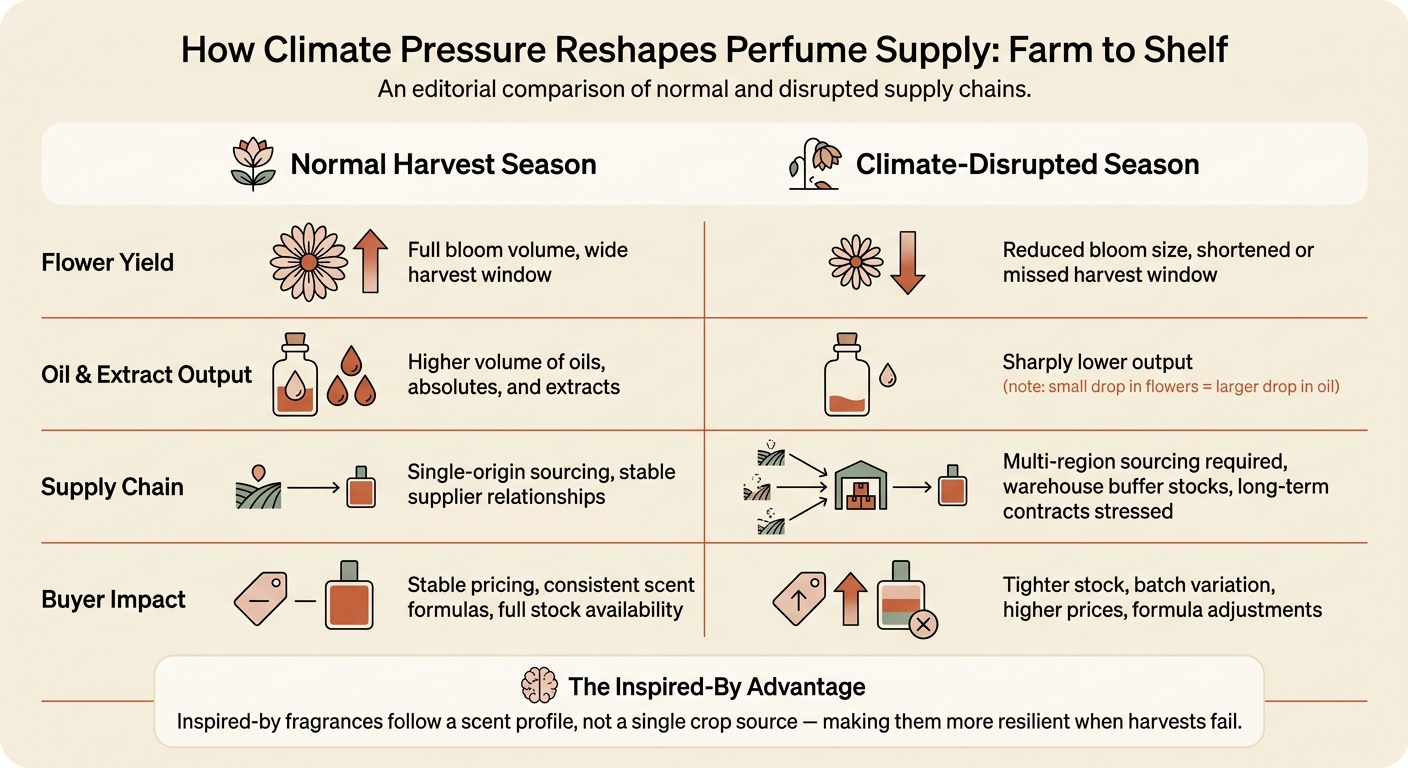
Less crop in the field means less perfume oil in the bottle. I’d sum it up like this: heat, drought, frost, floods, and shifting seasons are cutting flower harvests, tightening supply, and pushing fragrance prices up.
If you buy perfume, here’s what matters to you:
Lower yields mean fewer flowers for oils, absolutes, and extracts
Supply gets tighter when one bad season hits a key growing area
Quality can slip, which puts pressure on scent formula and stock levels
Brands spread sourcing across more than one region to cut single-harvest risk
Inspired-by fragrance can be easier to keep consistent because it follows a scent profile, not one fixed crop source
One point stands out: a small drop in bloom volume can lead to a larger drop in oil output, because not every kilo of flowers turns into much extract. So when harvests fall, the effect moves fast from farm to shelf.
For me, the article’s core message is simple: fewer flowers now shape what people can buy, what they pay, and how fragrance sellers keep products in stock.
How Climate Pressure Reshapes Perfume Supply: Farm to Shelf
Grasse: where climate pressure hits perfume crops first
Grasse shows what climate pressure looks like in the field. Here, the damage is hard to miss: heat, drought, frost, floods, and shifting seasons all shrink bloom size and cut harvest volume. And when flowering windows move or get shorter, growers bring in less raw material. That means lower oil output too.
This matters even more in Grasse because these crops depend on very exact growing conditions, and the harvest window is tight. A small disruption can throw the whole season off. An early frost, a dry spring, or an unseasonal downpour can squeeze or slash that window, leaving growers with less to pick and processors with less to extract.
And this isn’t just a Grasse problem anymore. The same pattern is now showing up in sourcing regions far beyond France.
the scent. none of the markup.
the same fragrances you already know, interpreted honestly and priced without the label tax.
Weather shocks reduce yields across sourcing regions. For perfume makers, that turns climate stress into a direct sourcing risk. Spreading supply across more than one region can lower the chance that a single bad harvest hits everything at once, but it can't stop supply from getting tighter.
Fewer flowers mean less oil, absolute, and extract
When harvests shrink, there’s simply less plant material to process into oils, absolutes, and extracts. That tightens supply and makes prices less stable.
Quality loss creates formulation and sourcing pressure
Lower-quality harvests put pressure on both formulation and sourcing. Perfumers and buyers have less room to manoeuvre across the supply chain. That pressure now shapes how formulas are built and how raw materials are bought.
How perfume makers are responding
When harvests get smaller, buyers tend to step back from single-origin sourcing. In plain terms, they don't want to depend on one place for a material if one bad season can throw everything off. So the fragrance industry is spreading key ingredients across several suppliers instead of leaning on a single origin.
Spreading sourcing across regions lowers single-harvest risk
On the sourcing side, some companies keep raw materials in central warehouses and pull from more than one origin to keep production moving. Others lean on long-term supplier relationships to steady supply and soften the blow when disruptions hit.
That kind of flexibility helps perfume production stay on track when one harvest fails. It matters even more when climate pressure affects both yield and quality at the same time.
What this means for fragrance buyers and for Mr. Dupe
For buyers, this shortage usually means fewer options and less stable pricing. Climate shocks don’t stay at the farm level. They reach shoppers through tighter stock, batch variation, and higher prices.
Why inspired-by fragrance can be more flexible under supply pressure
That’s where inspired-by fragrance has an edge. Inspired-by houses can move faster because they build around a scent profile, not one fixed harvest. So if one crop fails, the finished scent is less likely to change in a major way.
Why Mr. Dupe is a practical option for EU shoppers
When a crop fails or a raw material changes, buyers often need a quick way to find a close alternative. This kind of flexible model matters most when shoppers want a fast, low-risk replacement.
Compared with rigid department-store fragrance retail, Mr. Dupe keeps the process simpler under supply pressure: € pricing, EU-wide delivery, and a free 2 ml discovery vial so shoppers can test before they commit. Its profile-based approach is blended and bottled in Grasse, France, and the scent finder helps shoppers match by notes, mood, and known fragrances. That can make replacing a favourite scent much easier when it shifts or disappears.
Conclusion: fewer flowers are reshaping fragrance buying
Fewer flowers mean more volatility in classic fragrances. Flexible inspired-by options help keep scent discovery accessible.
FAQs
Why do small harvest losses cause bigger oil shortages?
Small harvest losses can turn into bigger oil shortages fast. Perfume crops are very climate-sensitive and need exact growing conditions. When heat, drought, frost, or floods hit key regions, supply can fall in a hurry.
That shortfall isn’t easy to replace. In many cases, quality and aroma profiles are closely linked to specific places, so you can’t just swap in crops from somewhere else and expect the same result.
For fragrance lovers, Mr. Dupe offers a steady way to keep enjoying consistent scents even when the market gets shaky.
Which perfume ingredients are most exposed to climate risk?
The provided sources do not name specific perfume ingredients or explain which ones face the most climate risk. So, based on those sources alone, this question can't be answered.
If you're looking for accessible fragrance options as global farming conditions shift, Mr. Dupe offers inspired-by perfumes, original scents, discovery vials, and a scent finder.
Will climate pressure make perfumes cost more in Germany?
Yes. Heat, drought, and shifting seasons can cut yields for delicate perfume crops in Grasse and other sourcing regions. That means less supply and higher raw material prices.
For fragrance lovers in Germany, Mr. Dupe offers another option with inspired-by perfumes that deliver a high-quality scent experience at a fraction of designer-brand prices.