Home Fragrance Oil Safety Guide | mr. dupe | mr. dupe
guides
Home Fragrance Oil Safety Guide
Fragrance oils can be hazardous if misused—match device, dose correctly, ventilate rooms, and keep away from children, pets, and birds.
by mr. dupe editorial, fragrance editors·
Home fragrance oils are safe only when I use them exactly as the label says. The main risks are simple: too much oil, the wrong device, poor airflow, heat, spills, and access by children or pets.
Before I use any product, I check 5 things:
Label: Is it clear and readable?
Format: Is it made for a diffuser, warmer, or reeds?
Dose: How much am I allowed to use?
Room: Is there airflow?
Storage: Can children or pets reach it?
A few facts matter right away. Birds can react badly even to low airborne exposure. Cats and dogs may also react, especially if they already have breathing problems. And if someone swallows the liquid, I do not cause vomiting - I call a regional Giftnotruf at once, and in Germany I call for severe symptoms.
112
Here’s the short version:
Use only as directed
Do not swap uses between devices
Keep rooms ventilated
Stop at once if there is coughing, wheezing, watery eyes, headache, nausea, skin irritation, pet drooling, or vomiting
Store upright, closed, and out of reach
Clean spills fast and unplug electric devices first
The Dangers Of Too Much Fragrance Oil + IFRA Standards
the scent. none of the markup.
the same fragrances you already know, interpreted honestly and priced without the label tax.
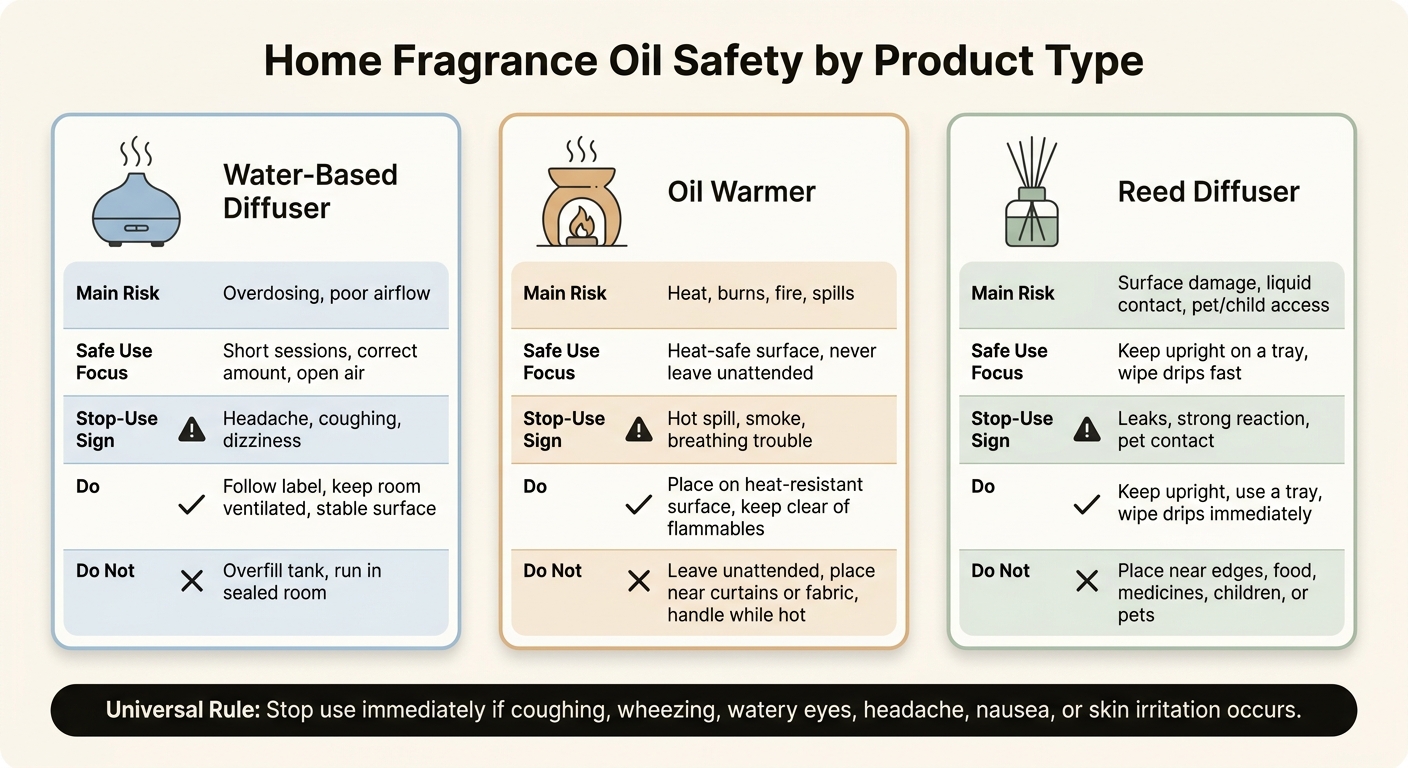
Home Fragrance Oil Safety: Diffuser vs Warmer vs Reed Diffuser
Product type
Main risk
Safe use focus
Stop-use sign
Water-based diffuser
Overdosing, poor airflow
Short sessions, correct amount, open air
Headache, coughing, dizziness
Oil warmer
Heat, burns, fire, spills
Heat-safe surface, never leave unattended
Hot spill, smoke, breathing trouble
Reed diffuser
Surface damage, liquid contact, pet/child access
Keep upright on a tray, wipe drips fast
Leaks, strong reaction, pet contact
If I keep to the label and watch for warning signs, home scent use stays simple and low-risk.
How to Use Each Home Scent Format Safely
After you check the label, use the oil only in the format it was made for. That part matters. A water-based diffuser, an oil warmer, and a reed diffuser don’t work the same way, so the safety steps aren’t the same either. Start with the format named on the label, then follow the guidance below.
Water-Based Diffusers: Correct Dosing and Ventilation
Set the diffuser on a stable, wipe-clean surface. Add only the amount of oil listed on the label, run it for short sessions, and then air out the room.
Do: follow the label, keep the room ventilated, and place the diffuser where it can’t be knocked over.
Do not: overfill the tank or run the diffuser in a sealed room.
Oil Warmers: Heat, Fire, and Burn Risks
Put oil warmers on a heat-resistant surface and keep them well away from curtains, paper, fabric, and other flammable materials. Don’t move one while it’s hot. It’s a small thing, but it can stop burns and spills.
Do: place on a heat-resistant surface, keep clear of flammables, and let it cool before moving.
Do not: leave unattended, place near curtains, paper, or fabric, or handle while hot.
Reed Diffusers: Preventing Liquid Contact and Surface Damage
Keep reed diffusers upright, set them on a tray, and place them away from edges, food, and medicines. The liquid can stain or damage surfaces, so wipe up drips straight away.
Do: keep upright, use a tray or coaster, and wipe drips at once.
Do not: place near edges, food, medicines, children, or pets.
Next, keep these products out of reach of children, pets, and other sensitive household members.
Protecting Children, Pets, and Sensitive Household Members
After you’ve picked the right product format, the next step is simple: look at who shares the space. A nice scent can make a room feel fresh, but it doesn’t mean the air is safe. That’s why it pays to be extra careful around children, birds, and pets. Even when fragrance oils are used the right way, they can still irritate people or animals with more sensitive systems.
Room Use and Storage Rules
Start with the room itself. Good airflow matters. So does basic storage.
Do:
Use fragrance oils in well-ventilated rooms.
Keep bottles closed, stored upright, and out of reach of children and pets.
Do not:
Use fragrance oils in small, closed rooms.
Leave them anywhere a child or pet could get to them.
Room setup comes first. After that, think about pet exposure.
Pet-Specific Precautions for Cats, Dogs, and Birds
Keep fragrance oils away from birds. With cats and dogs, be extra careful if they have asthma, allergies, or breathing problems. If a pet starts coughing, sneezing, panting, or suddenly leaves the room, stop use right away.
If any person or pet reacts badly, stop use and follow the spill and exposure steps next.
What to Do After a Spill, Exposure, or Reaction
If a spill or exposure happens, act straight away.
Immediate Steps for Skin, Eye, Inhalation, and Surface Spills
Skin contact: Wash the affected area at once with soap and water.
Eye contact: Rinse the eye immediately with clean water.
Inhalation: If you feel dizzy, get a headache, or have trouble breathing, move into fresh air and air out the room.
Surface spill: Turn off and unplug any oil warmer or electronic diffuser before you go near the spill. Keep children and pets out of the room while you clean it up. If the spill is large, leave the room and ventilate it first.
If the Product Is Swallowed or Symptoms Get Worse
Do not make the person vomit. Keep the bottle or label close by. Medical staff and Giftnotruf need the ingredient list and hazard symbols to give the right advice. Call your regional Giftnotruf immediately, even if no symptoms show up. In Germany, call 112 if symptoms are severe or life-threatening.
When to Stop Use and the First-Time Buyer Checklist
If a product causes a warning sign, stop using it first. And if you're about to try a new one, run through a few checks before you open it.
Stop-Use Triggers
Stop using the product if you, or anyone else in the room, gets coughing, wheezing, watery eyes, headache, nausea, or skin irritation.
Physical damage is a stop signal too. A cracked container, leaking bottle, damaged cable, or unreadable label all mean the same thing: stop right away.
For pets, drooling or vomiting means stop use at once. Remove the product from the room right away.
First-Time Buyer Safety Checklist
Before first use, check the label, instructions, format, room fit, and storage plan.
Treat these warning signs as your final buy-or-stop test.
Once the product passes the safety rules above, use this checklist before first use.
Check
What to Do
Label
Confirm the label is readable and matches the product.
Instructions
Follow the manufacturer's instructions.
Suitability
Confirm it matches the room and device.
Storage
Store it safely out of reach of children and pets.
Stop-use plan
Know the warning signs above and stop use right away if they appear.
FAQs
Can I use one fragrance oil in any device?
No. Always check the manufacturer’s instructions for both your device and the fragrance oil to make sure they’re compatible.
The wrong oil can damage the device or create safety risks. For a safer, more reliable experience, explore Mr. Dupe’s curated home scent collection and follow the device manufacturer’s guidance.
How long should I run a diffuser safely?
In most cases, run a home fragrance diffuser for 30 to 60 minutes per session.
If you leave it on much longer, two things can happen: your nose may get used to the scent, and the fragrance can start to feel too strong in the room. That means you notice it less, even while the air feels heavier.
Also, keep the room well ventilated while the diffuser is running.
What should I do if my pet reacts?
If you think your pet is reacting to a home fragrance oil, stop using the diffuser or warmer right away. Then move your pet to a well-ventilated area with fresh air.
If symptoms such as lethargy, difficulty breathing, drooling, or tremors continue, contact your veterinarian at once. When using Mr. Dupe home scents, always keep pets out of confined spaces.